Who Is Your PRRS? A Step-by-Step Guide to Appointing and Training Your Person Responsible for Racking Safety

A Person Responsible for Racking Safety (PRRS) is a person appointed by a business to oversee the safe use, inspection and maintenance of its racking and storage equipment. The PRRS helps coordinate regular inspections, ensure damage is reported and addressed, maintain inspection records and arrange competent expert inspections when required.
Companies spend a great deal of time making sure that their CEOs, CFOs, and CTOs are the right people for the job. If you’re in the logistics or warehousing business, however, there’s another vital acronym that your company needs to correctly fill – that of PRRS (Person Responsible for Racking Safety).
With the Health and Safety Executive (HSE) and the Storage Equipment Manufacturers’ Association (SEMA) recommending that any business using pallet racking have a PRRS to oversee it, we’re going to look at exactly what this role is, how to select the right person for the job, and how companies like SEE Racking Inspections can help make the process as easy as it is effective.
Key Takeaways
- Accountability is key: The PRRS acts as the central hub for warehouse safety, ensuring staff document racking inspections and address damage before it creates a safety risk.
- Choose for operational proximity: The ideal PRRS should be someone who works regularly on the warehouse floor, has an eye for detail and possesses the authority to enforce safety measures.
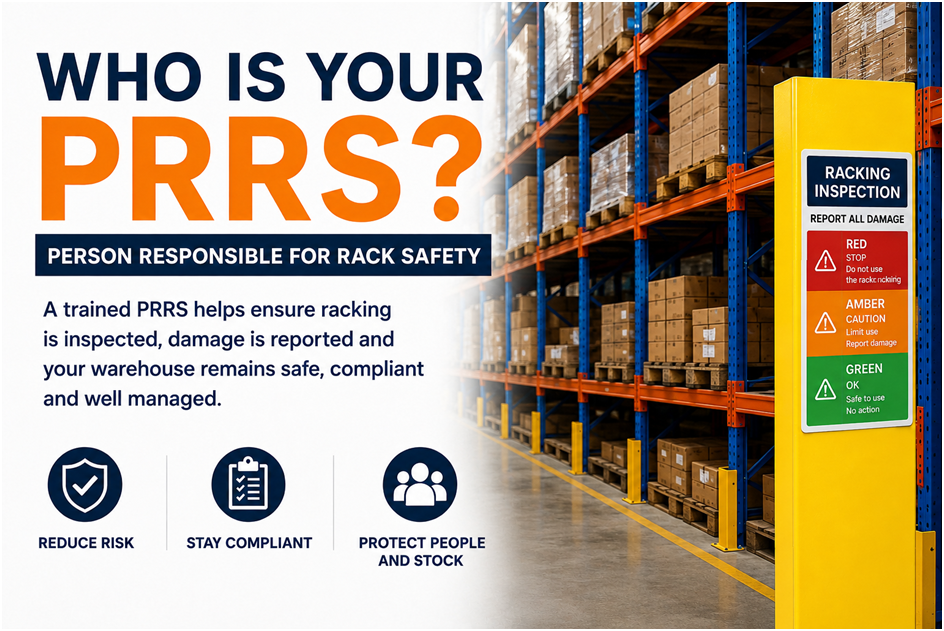
- Formal training is vital: A PRRS doesn’t deal in guesswork. Professional training gives them the technical skills to classify damage using SEMA’s traffic-light risk system.
- Safety is multi-tiered: An effective safety programme combines daily damage reporting by staff, weekly visual inspections by the PRRS, and an annual independent inspection from a SEMA-approved inspector.
What is a Person Responsible for Racking Safety (PRRS)?
A business nominates a PRRS to oversee the safe use, routine inspection, and ongoing maintenance of pallet racking and storage systems.
Acting as the focal point for all things related to rack safety within an organisation, they’re the bridge between the warehouse floor and senior management. They make sure that damaged or unsafe racking is identified, reported and properly dealt with before a minor issue escalates into a major workplace hazard.
SEMA guidance states that the PRRS is responsible for implementing and maintaining an effective rack safety management system. While they do not need to handle every task themselves, they remain accountable for ensuring that staff carry out regular internal inspections, maintain accurate records, and complete necessary repairs promptly.
Why is a PRRS Important?
Every day, warehouse racking systems are subjected to immense stress. They’re vulnerable to forklift truck impacts, overloading, poor pallet loading practices, and general operational wear and tear. A racking system failure can cause serious injury to your staff and significant disruption to your business. Take responsibility for racking safety rather than relying on guesswork or assuming that it is “someone else’s job.”
By appointing a trained PRRS, your business can actively:
- Catch damage early: Identify structural defects and rack damage before they become dangerous.
- Maintain strict compliance: Ensure staff complete, document, and maintain auditable records of all mandatory safety inspections.
- Promote safer habits: Encourage and enforce safe loading and unloading practices among forklift operators and warehouse staff.
- Streamline maintenance: Coordinate swift repairs and maintenance with reliable components and competent installers.
- Demonstrate legal due diligence: Show clear compliance with UK HSE legislation (such as PUWER) and industry-standard SEMA recommendations.
- Boost safety culture: Improve the overall safety culture on the shop floor by making safety an open, daily conversation.
In short, a PRRS provides accountability and keeps safety from falling through the cracks of a busy production schedule.
How Do You Appoint a PRRS?
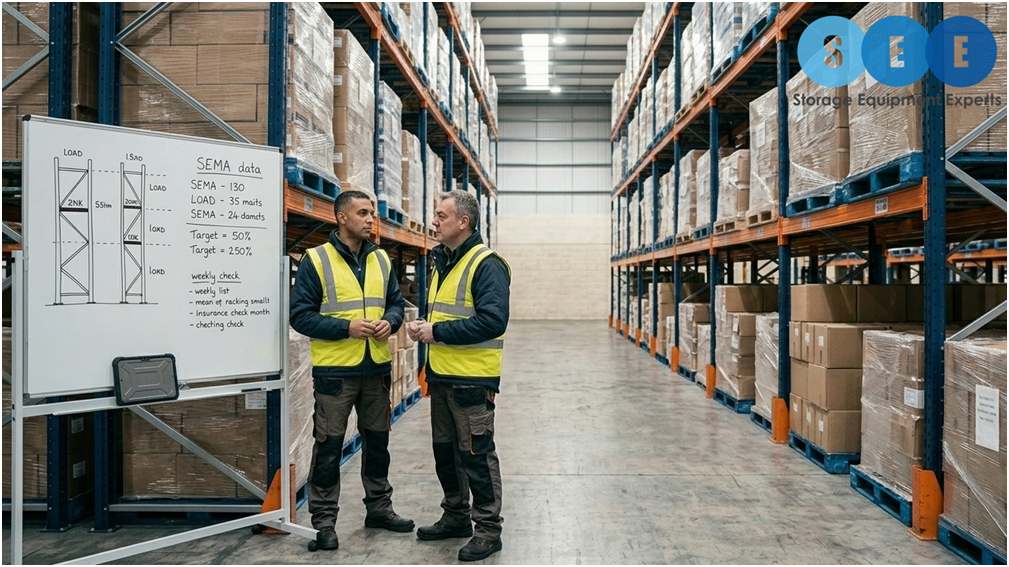
Choosing the right individual is probably the most important decision in any rack safety programme. You can’t simply pick a name out of a hat or assign the title to someone who’s never on the warehouse floor.
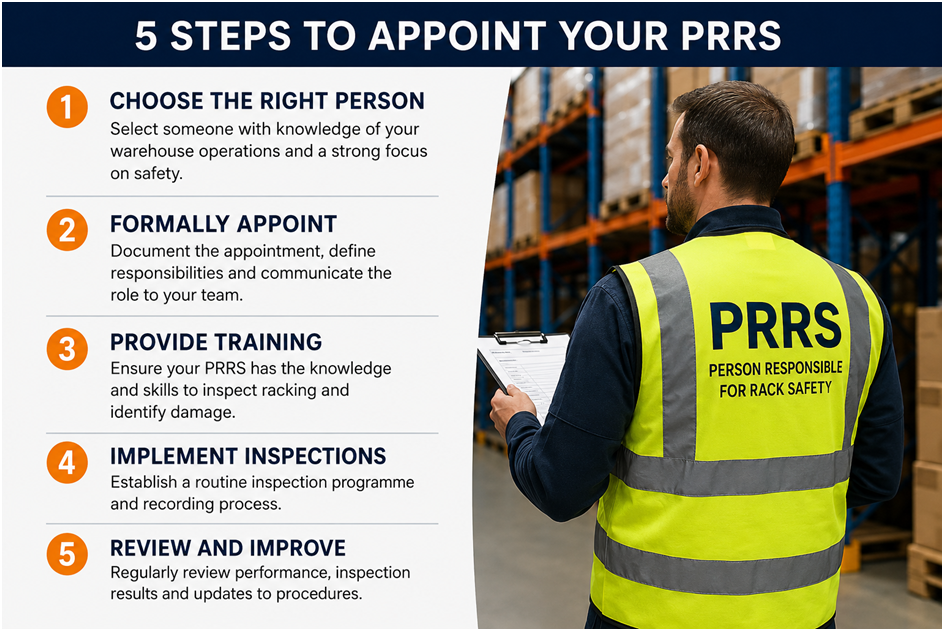
Step 1: Identify the right person
The ideal PRRS should:
- Work regularly within the physical warehouse environment.
- Have an in-depth understanding of your daily warehouse operations.
- Be highly organised, observant and detail-oriented.
- Possess the internal authority to raise safety concerns directly with upper management.
- Be comfortable communicating clearly with both senior managers and warehouse teams.
- Have a genuine commitment to maintaining high safety standards.
Common PRRS candidates include:
- Warehouse Managers
- Operations Managers
- Health & Safety Managers
- Warehouse Supervisors
- Facilities Managers
- Team Leaders
While prior technical experience can be helpful, it is not essential. The individual needs appropriate rack safety training and sufficient operational support to carry out the role effectively.
Step 2: Formally Appoint the PRRS
Once you’ve selected the right person, formally document their appointment. This clearly defines internal responsibilities and ensures everyone in your organisation knows who holds accountability for rack safety.
A formal appointment should cover three core areas:
1. Defined Responsibilities
The PRRS must officially take responsibility for:
- Conducting regular internal visual rack inspections.
- Recording all inspection findings in a centralised safety log.
- Reporting severe damage and immediate safety concerns to management.
- Monitoring and signing off on necessary repair work.
- Maintaining long-term inspection and maintenance records.
- Liaising with external, independent rack inspectors.
- Promoting the safe use of storage equipment across the workforce.
2. Clear Authority
A PRRS won’t be of much use if they don’t have the power to enforce safety rules. They need to be able to:
- Escalate safety concerns without friction.
- Request maintenance budgets for urgent repairs.
- Implement corrective actions.
- Restrict access to unsafe areas if a risk is identified.
3. Clear Communication to Staff
Inform all warehouse personnel about the appointment. Everyone on the floor needs to know who the PRRS is, how to report rack damage immediately, and what daily or weekly inspection procedures are in place.
Step 3: Provide Specialist PRRS Training
To perform the role effectively, a PRRS needs the technical knowledge and practical skills to recognise subtle rack damage, understand industry-standard risk classifications (such as SEMA’s Green, Amber, and Red risk categories) and implement the right corrective actions.
With professional PRRS racking training, your candidate will be able to confidently:
- Identify different racking components and understand their structural purposes.
- Recognise common, subtle forms of rack damage and beam deflection.
- Understand and apply SEMA damage classifications accurately.
- Carry out structured, routine internal inspections.
- Maintain legally compliant, audit-ready inspection records.
- Understand current HSE regulations and SEMA guidelines.
- Implement best-practice rack safety procedures across the site.
Step 4: Establish a Routine Inspection Programme
Once trained, your PRRS needs to design and implement a structured inspection system built around 3 core ideas:
- Continuous monitoring: Every member of the warehouse team needs to remain vigilant. If a forklift strikes a frame, it needs to be reported to the PRRS immediately, rather than waiting for the next scheduled inspection.
- Regular internal inspections: The PRRS should conduct regular visual inspections at intervals appropriate to the warehouse’s activity levels, operating conditions and risk profile.
- Annual expert inspection: HSE guidance recommends that a technically competent person carries out an expert inspection at intervals not exceeding 12 months, while the frequency of internal inspections should reflect the risks and operating conditions of the workplace.
Step 5: Review and Continually Improve
Needless to say, rack safety isn’t a one-off exercise – it’s an ongoing process. Your PRRS should regularly sit down with management to review internal inspection findings, look for repeating damage trends, review repair records, and evaluate how changes to warehouse operations or new racking installations might impact overall site safety.
Tracking these trends allows your business to address the root causes of damage and lower operational risk at a fundamental level.
Book Professional PRRS Training with SEE Racking Inspections
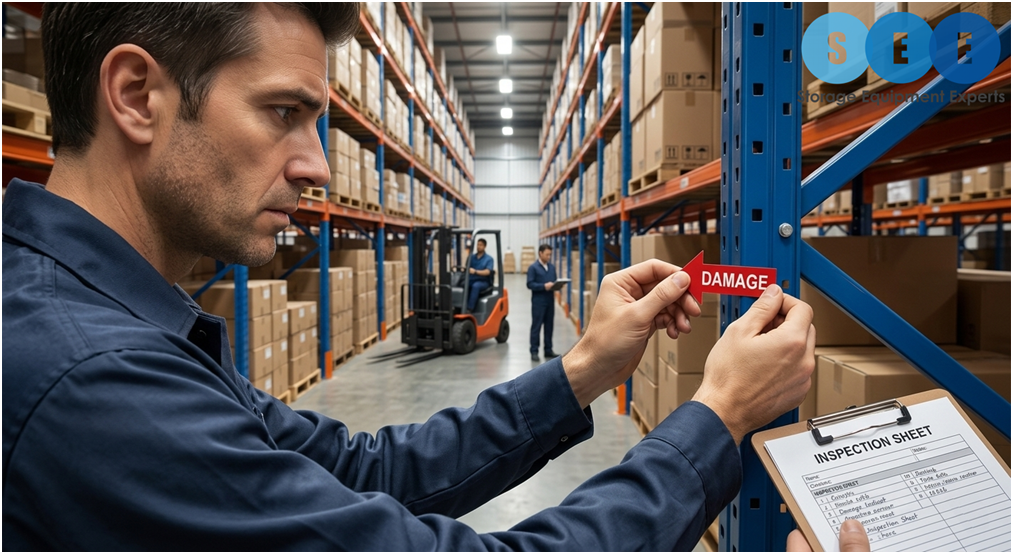
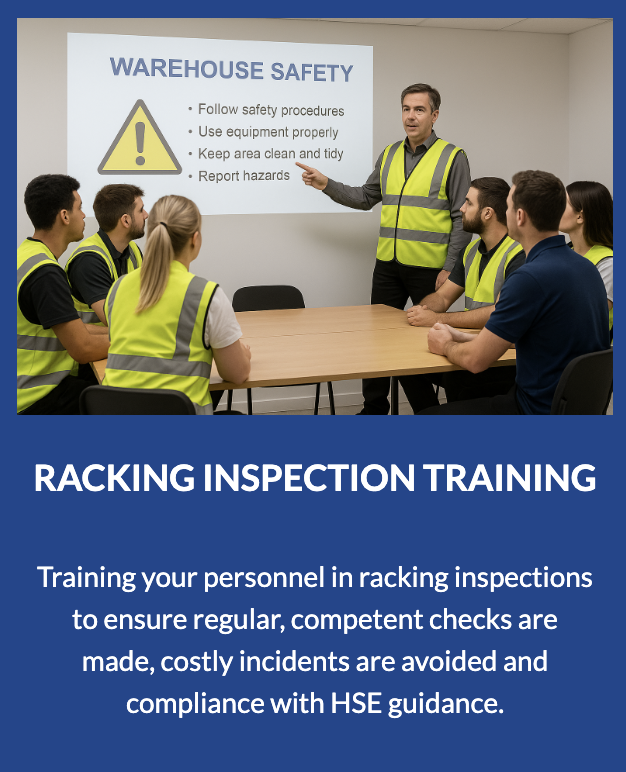
SEE Racking Inspections offers a dedicated Racking Inspection Training Course specifically designed for people stepping into the PRRS role.
Delivered by highly experienced, SEMA-Approved Racking Inspectors (SARI), our courses provide practical, real-world guidance that gives your elected candidate the skills they need to confidently and comprehensively manage rack safety.
Whether you are appointing a new PRRS or looking to upskill your existing team, investing in our training course is one of the wisest decisions you can make for both the safety of your warehouse and the longevity of your business.
Book a Person Responsible for Racking Safety training course with SEE Racking Inspections and make your warehouse a safer and more productive place for everyone involved.
FAQs
1. What does PRRS stand for?
PRRS stands for Person Responsible for Racking Safety. It is the person appointed by a business to oversee the safe use, inspection and maintenance of its racking and storage equipment.
2. What is a Person Responsible for Racking Safety (PRRS)?
A PRRS is a person appointed within a business to oversee racking safety arrangements. Their responsibilities may include organising inspections, monitoring reported damage, maintaining records, and ensuring that the business takes appropriate corrective action.
3. Who should be appointed as a PRRS?
A PRRS should be someone who has suitable knowledge, authority and understanding of the warehouse’s racking systems and working practices. They may be a warehouse manager, operations manager, facilities manager or another suitably trained employee.
4. Does a PRRS need racking inspection training?
A PRRS should have suitable knowledge and training to carry out their responsibilities effectively. Racking inspection training can help them recognise common damage, understand inspection procedures and know when issues require further action.
5. What are the responsibilities of a PRRS?
A PRRS is responsible for overseeing the site’s racking safety arrangements. This can include ensuring regular inspections take place, checking that reported damage is dealt with, maintaining inspection records and arranging expert inspections when required.
6. What should a PRRS do if pallet racking is damaged?
Report and assess damage promptly. If damage creates a safety risk, control the affected area and take appropriate corrective action. Repair or replace damaged equipment as necessary before returning it to safe use.
7. What is the difference between a PRRS and a SEMA Approved Racking Inspector?
A PRRS is responsible for overseeing racking safety within the business, while a competent racking inspector carries out specialist inspections of the storage equipment. A business may use an external competent inspector for its periodic expert inspection.
8. Where can I get PRRS or racking inspection training?
SEE Racking Inspections provides racking inspection and safety training designed to help people responsible for racking safety understand inspection procedures, identify common hazards and manage racking safety within their workplace.