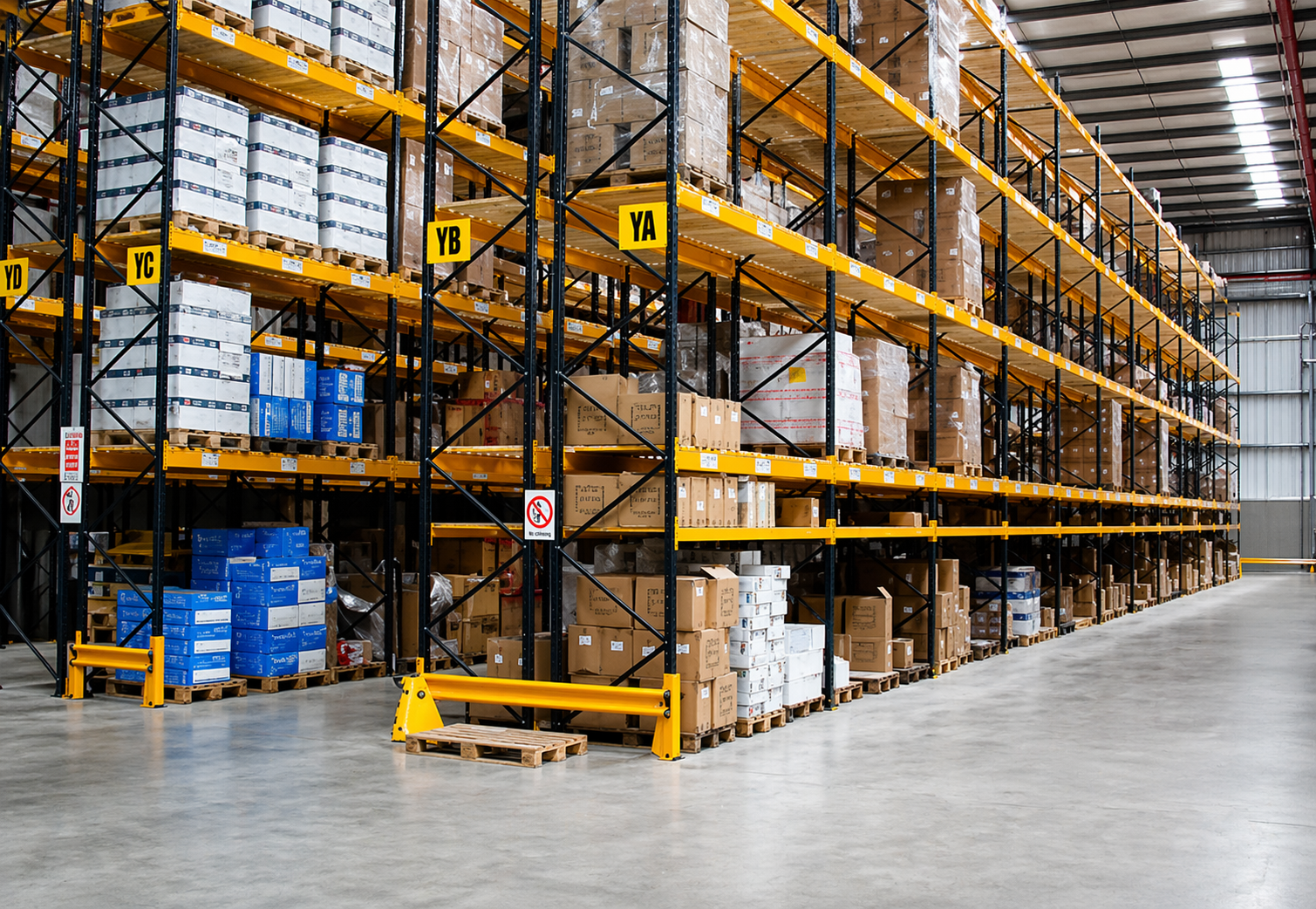
Adjustable Pallet Racking
The most common warehouse storage system for palletised goods.

Ensure your warehouse racking remains safe, compliant, and fit for daily operations with professional warehouse racking inspections from SEE Racking Inspections.
"*" indicates required fields
Ensure Your Warehouse Racking Is Safe & Compliant!
A warehouse racking inspection checks your storage systems for damage, defects, instability and other safety issues. We inspect different warehouse storage systems, including pallet racking, cantilever racking, mobile racking and shelving.
Our inspectors check the condition of the structure, connections, fixings, protection equipment, alignment, visible damage and load capacity information. We also identify issues that may require remedial action.
You receive a detailed inspection report showing identified defects, their level of risk and recommended remedial action.
We plan inspections around your warehouse operations wherever possible to minimise disruption. Some equipment or areas may need to be temporarily isolated during the inspection.
Serious or immediate safety risks are highlighted to the responsible person without delay. The affected equipment or area may need to be taken out of use until suitable remedial action is completed.
Even well-maintained warehouses can develop racking issues over time. Our inspections are designed to detect problems before they become serious safety hazards.
Forklift Impact Damage: Repeated contact from forklift trucks can weaken uprights, beams, and structural connections without immediately being noticed.
Bent or Damaged Components: Frames, beams, braces, and connectors are checked for signs of bending, twisting, cracking, or other structural damage.
Missing Safety Components: We inspect beam safety locks, floor fixings, guards, and other essential components that help maintain the stability of the racking system.
Incorrect Loading Practices: Overloaded bays, uneven weight distribution, and unsuitable pallet placement can place unnecessary stress on warehouse racking.
Poor Installation or Alterations: Changes made during warehouse expansion or relocation may affect the performance and safety of the storage system if not completed correctly.
General Wear and Tear: Daily warehouse operations naturally cause wear over time. Regular inspections help identify deterioration before it affects safety.
A damaged racking system doesn’t just affect storage, it can impact the safety, productivity, and reputation of your entire business.
Regular warehouse racking inspections help you:
Improve workplace safety for employees and visitors.
Identify structural damage before it becomes a serious hazard.
Reduce the risk of product loss and costly warehouse disruption.
Extend the working life of your storage equipment.
Support compliance with HSE guidance and recognised industry standards.
Plan maintenance and repairs before problems become more expensive.
Demonstrate a proactive approach to warehouse safety management.
Our inspectors have experience assessing a wide range of warehouse storage systems across different industries.
The most common warehouse storage system for palletised goods.
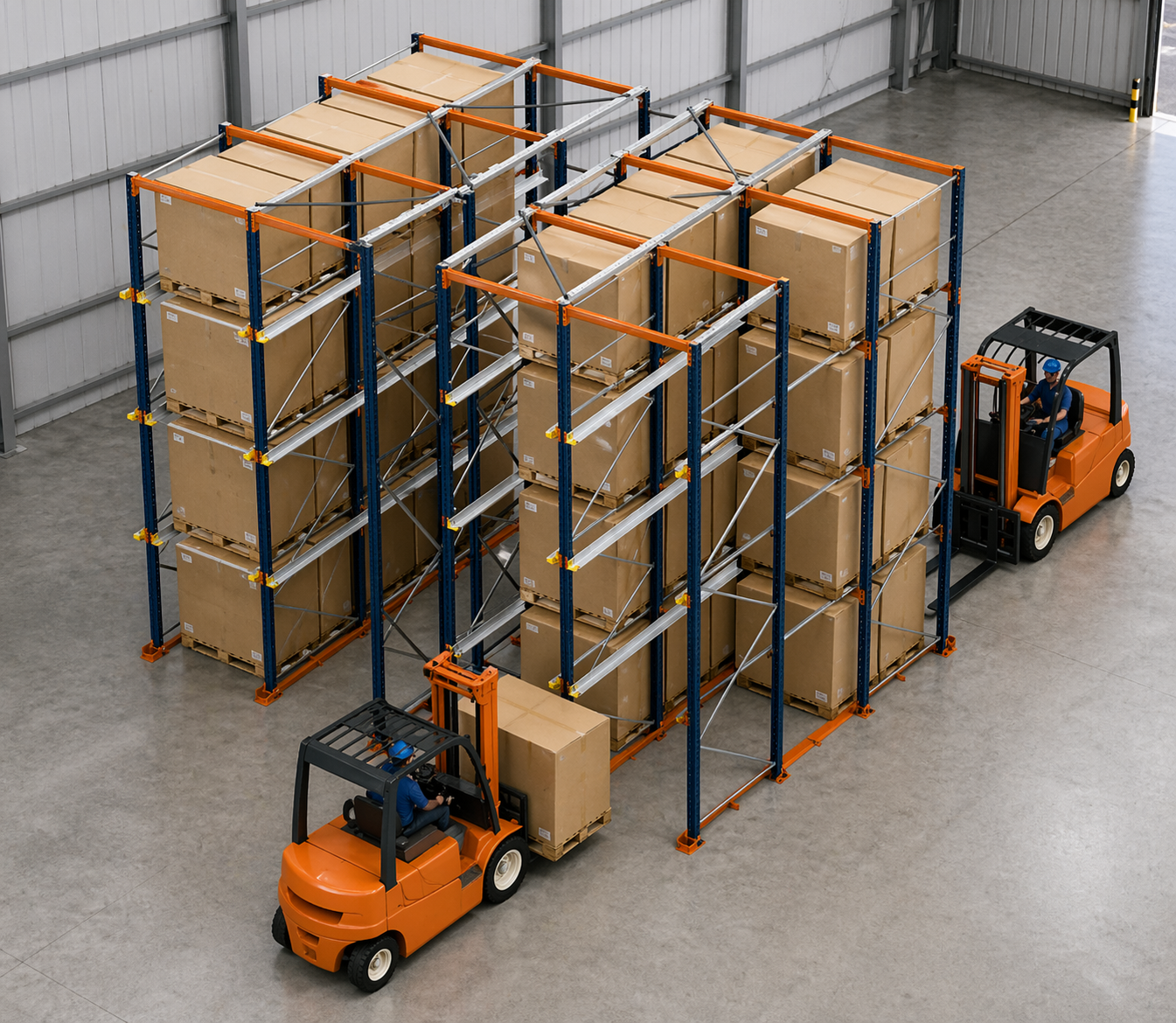
High-density storage designed to maximise warehouse space.
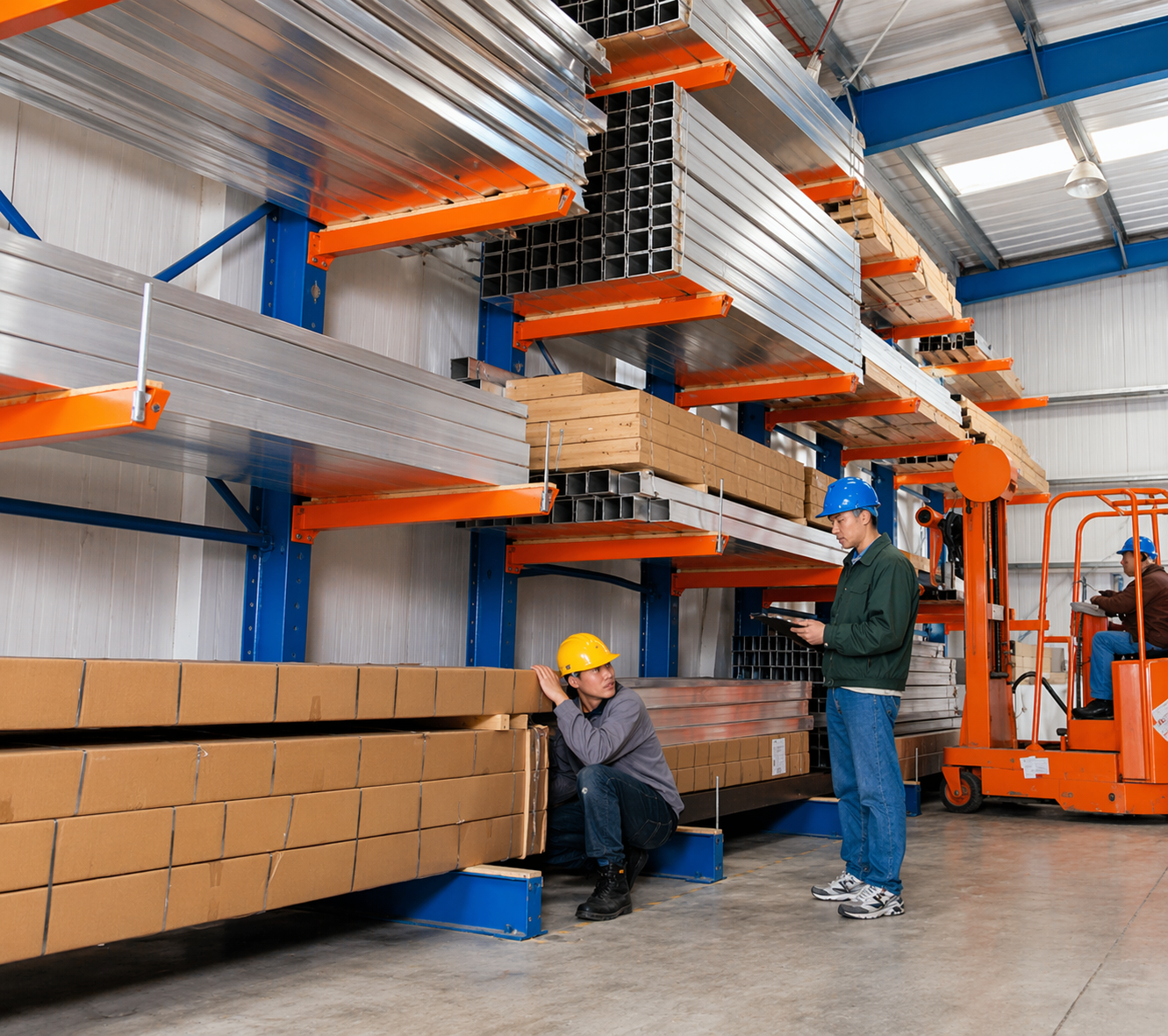
Ideal for storing long or bulky materials such as timber, pipes, and steel.
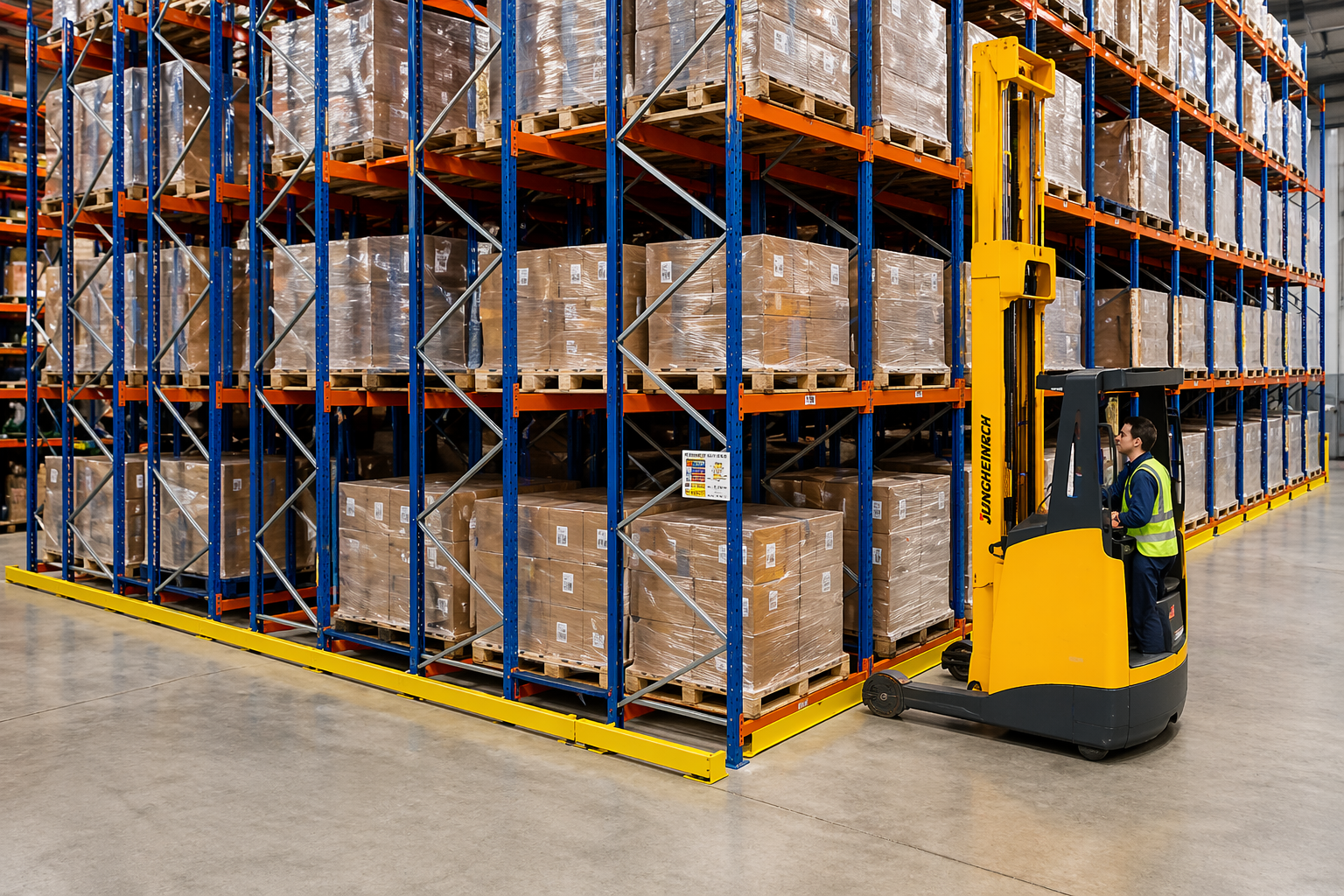
Efficient storage systems designed to improve warehouse capacity and accessibility.
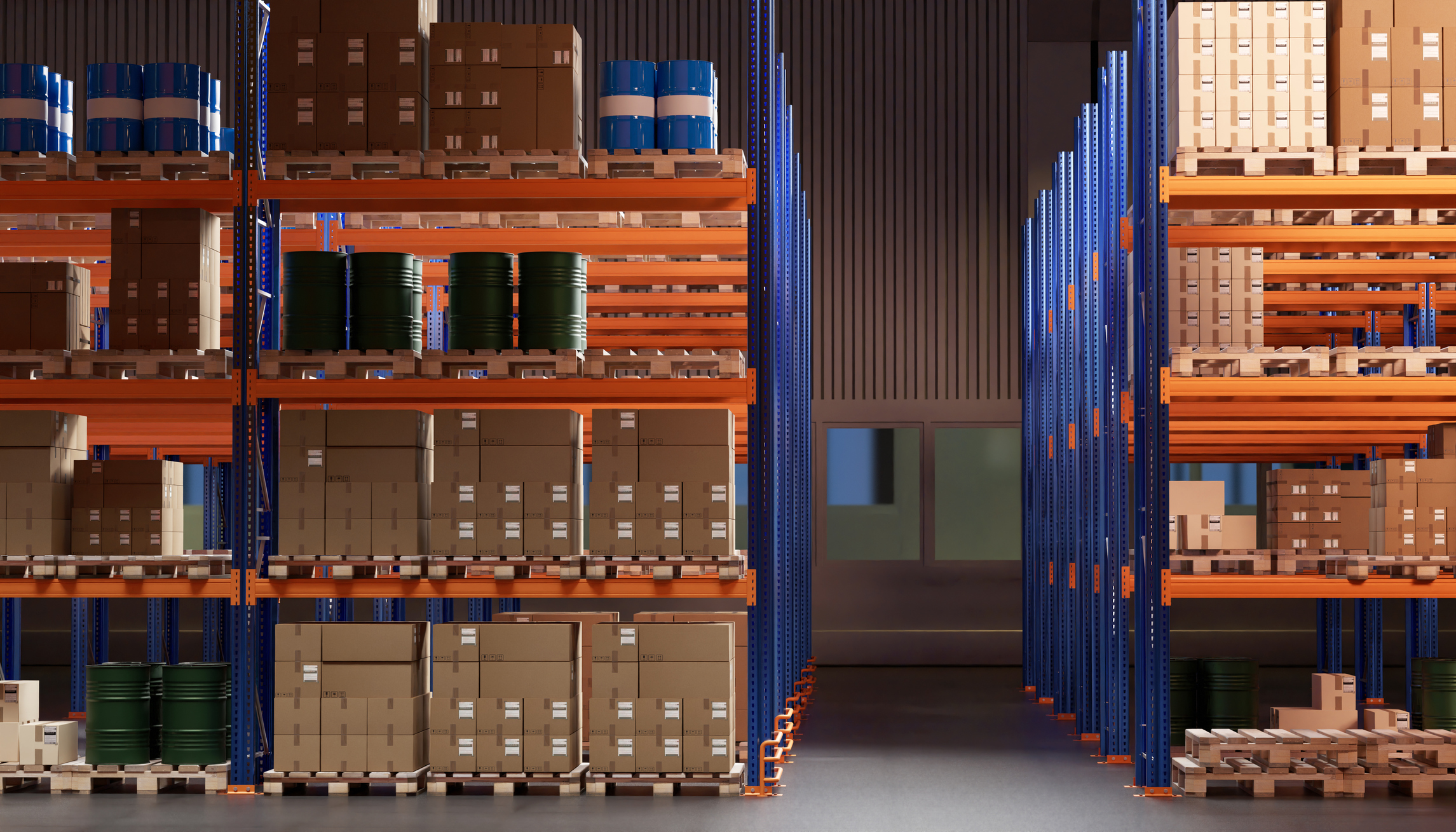
Gravity-fed racking system designed for efficient storage and quick access to high-turnover inventory.
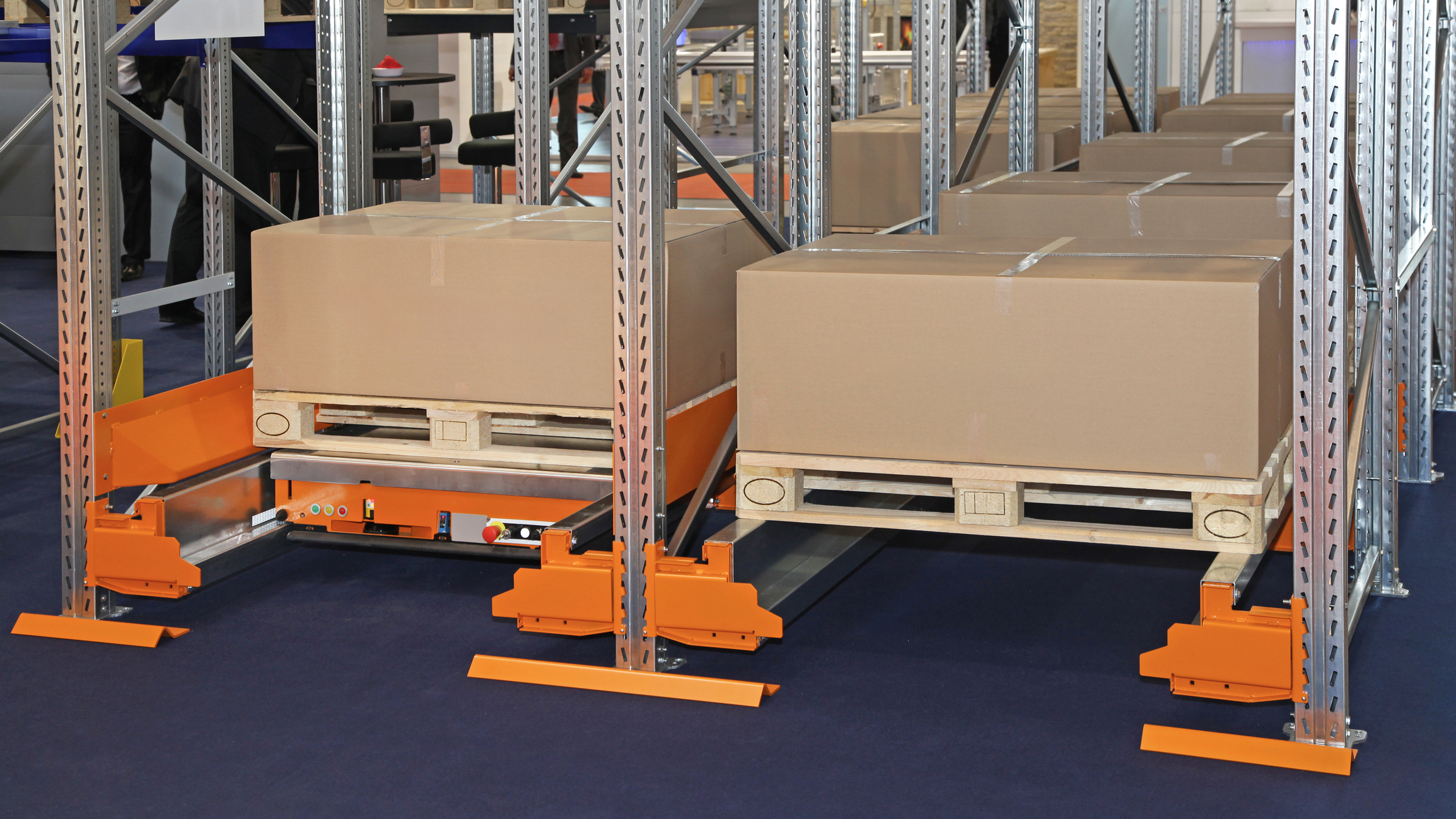
Moveable storage solutions that maximise available warehouse space.
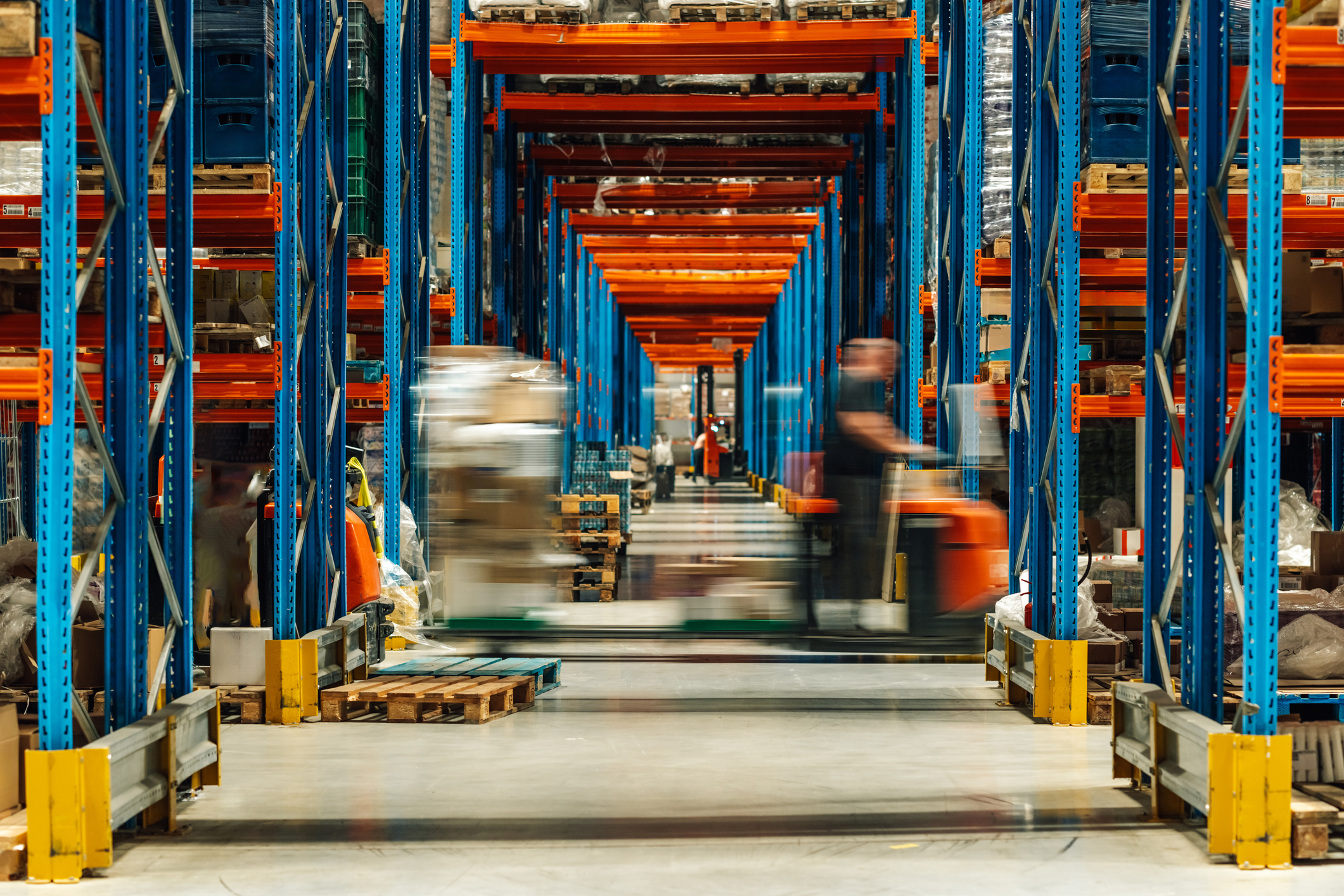
Industrial shelving used for cartons, components, and smaller inventory items.
Every warehouse inspection includes a thorough assessment of the storage system to identify defects, damage, and potential safety concerns.
Inspection of frames for bends, impact damage, corrosion, distortion, and structural integrity.
Assessment of beam condition, locking devices, beam deflection, and secure connections.
Checking horizontal and diagonal bracing to ensure the racking remains stable under normal operating conditions.
Inspection of anchor bolts, base plates, and floor fixings to confirm the racking is securely installed.
Verification that load notices are present, accurate, and clearly visible throughout the warehouse.
Inspection of column guards, end-of-aisle barriers, pallet support bars, and protective accessories.
Review of rack alignment, overall stability, and any signs of movement or structural distortion.
A detailed report outlining observations, photographs, identified risks, and practical recommendations to help maintain safe warehouse operations.
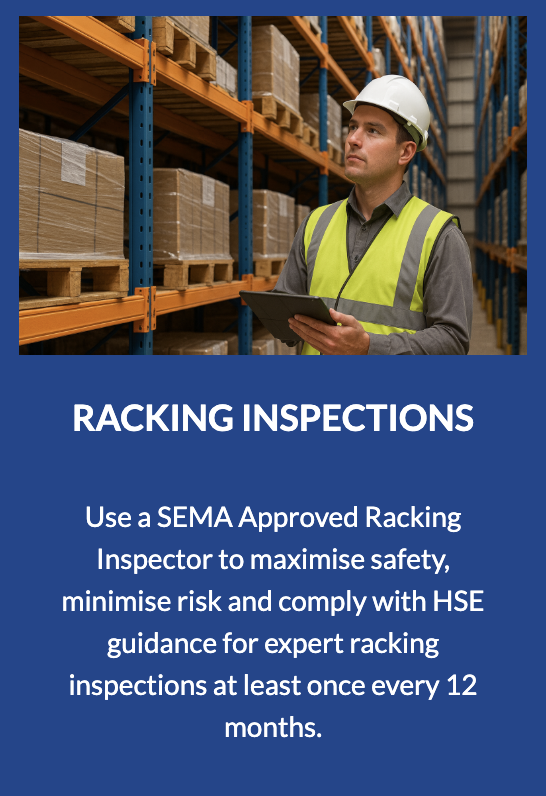
SEMA recommends that warehouse racking is inspected by a competent person at least once every 12 months, alongside regular in-house visual inspections.
Independent inspections should be carried out by a competent inspector with specialist knowledge of warehouse storage systems, such as a SEMA Approved Rack Inspector (SARI).
The inspector examines the structural condition of the racking, identifies damage or safety concerns, assesses compliance with industry guidance, and provides a detailed inspection report.
Yes. In most cases, inspections are planned to minimise disruption, allowing warehouse activities to continue wherever it is safe to do so.
Any damage identified during the inspection will be explained in the report, together with recommendations for repair, replacement, or further action depending on the level of risk.
Our independent SEMA Approved Rack Inspectors provide professional warehouse racking inspections across the UK, helping businesses improve safety, reduce risk, and maintain reliable storage systems through detailed reporting and expert guidance.