
Person Responsible for Rack Safety (PRRS) Training Course
Delivered by SEMA-approved Racking Inspectors (SARI)
Equip your PRRS with the technical skills, practical knowledge, and authority needed to protect your warehouse operations and support compliance with relevant UK health and safety duties and HSE guidance.
"*" indicates required fields
Person Responsible for Rack Safety (PRRS) Training Course
At a glance: What you need to know
Course objective: Train your appointed internal candidate to effectively oversee, inspect and maintain pallet racking safety across your operations.
Taught by experts: Our courses are delivered by highly experienced SEMA Approved Racking Inspectors (SARI).
Compliance ready: Align your workplace with HSE Guidance (HSG76) and PUWER 1998 regulations.
Inspection protocols: Learn how to structure daily visual checks, weekly or fortnightly internal warehouse racking inspections and manage annual audits.
Component expertise: Gain a full technical understanding of uprights, beams, bracing, floor fixings, and safety accessories.
Actionable guidance: Clear instruction on setting up inspection logs, establishing reporting procedures and managing repairs.
Flexible delivery: Available via on-site training at your workplace or through interactive live online sessions, our courses work around you.
What is a PRRS?
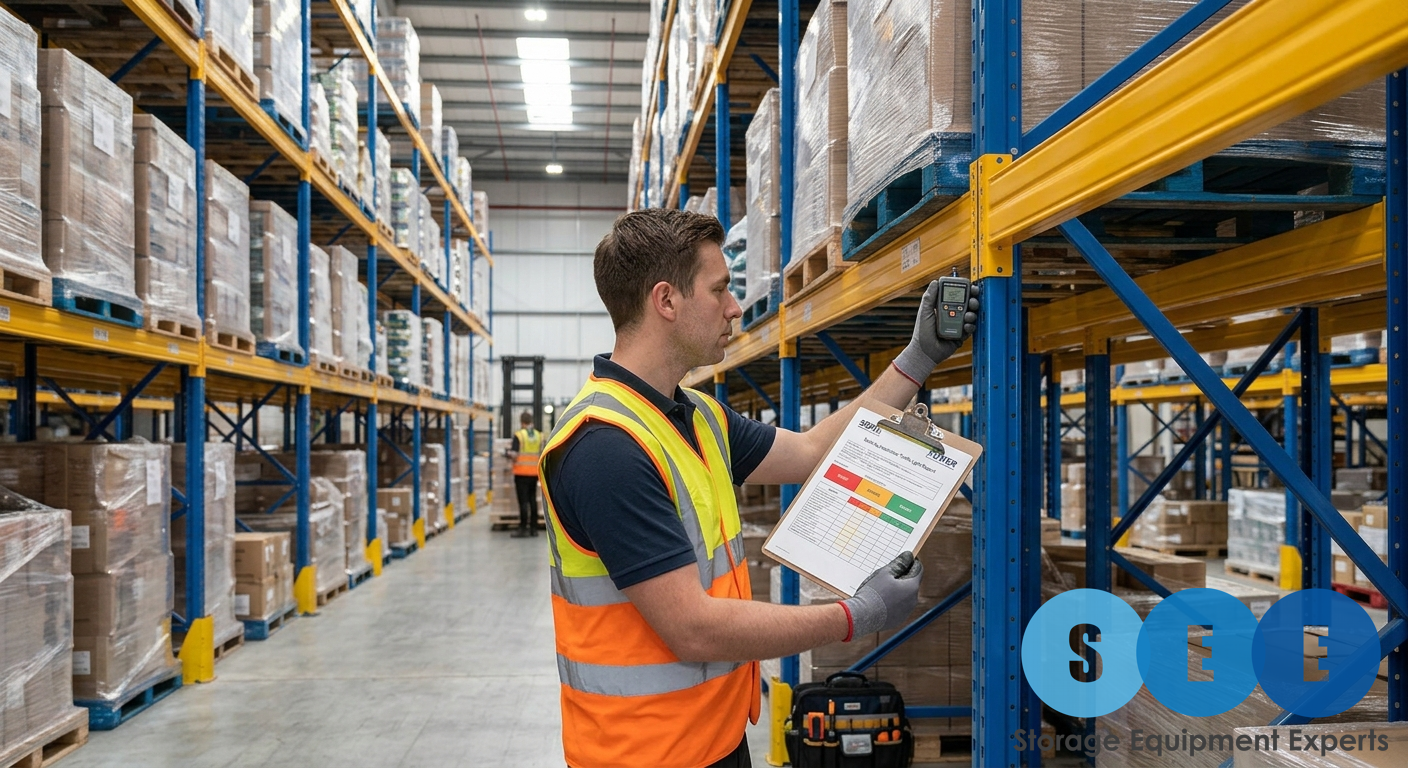
A Person Responsible for Rack Safety (PRRS) is an individual nominated by an organisation to oversee the safe use, routine internal inspection and ongoing maintenance of warehouse racking and storage systems.
With storage equipment continually subject to operational stresses and risks, even seemingly minor structural damage can result in a major rack collapse, resulting in downtime, asset loss, physical injury, and worse. A PRRS helps organisations avoid these dangers by acting as the focal point for all rack and warehouse safety matters.
Positioned as the key link between the warehouse floor and senior management, a PRRS makes sure that damaged or unsafe storage equipment is identified, documented, and repaired before it becomes a problem.
Why is PRRS training so important for your business?
1. Legal compliance & due diligence
Under the Provision and Use of Work Equipment Regulations 1998 (PUWER), pallet racking is classified as work equipment. Employers have a strict legal obligation to keep it maintained in a safe condition. Training a dedicated PRRS provides clear, auditable proof of legal due diligence under PUWER and HSE HSG76 guidelines.
2. Early damage detection
Structural rack failure rarely happens without warning. A trained PRRS can catch the subtle signs that signal potential problems long before major equipment failure occurs.
3. Reduced repair costs & downtime
Unidentified damage leads to sudden, emergency offloading and severe operational disruption. By identifying issues early, your PRRS allows you to schedule routine maintenance efficiently, reducing emergency repair bills and operational downtime.
4. Staff safety & morale
Appointing a visible, trained PRRS gives staff a direct, friction-free channel to report damage, reinforcing a positive safety-first culture across the shop floor.
Who should be appointed as your PRRS?
Selecting the right individual is one of the most important decisions in setting up a rack safety programme.
Key criteria for selection
The ideal PRRS should be someone who:
- Works regularly within the physical warehouse environment and understands daily floor operations.
- Possesses an eye for detail, strong organisational skills and a methodical mindset.
- Holds sufficient internal authority to enforce safety rules, isolate unsafe racking and raise urgent concerns with management.
- Communicates clearly with both shop-floor operators and senior directors.
Common PRRS candidates include:
- Warehouse Managers & Operations Managers.
- Health, Safety & Environment (HSE) Managers.
- Warehouse Supervisors & Shift Leaders.
- Facilities & Maintenance Managers
Importantly, prior technical racking experience isn’t mandatory – our SEMA Approved Racking Inspectors provides all the technical training required. What matters most is the candidate’s operational proximity and commitment to safety.
What our PRRS Training Course covers covers
Delivered by SEMA-approved Racking Inspectors (SARI), our comprehensive PRRS racking training course combines technical theory with practical, real-world application to provide your PRRS with full confidence in their role.
Racking anatomy & structural principles
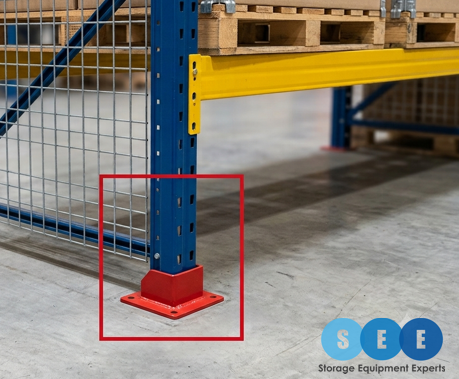
Understanding uprights, frame bracing, beams, baseplates, floor fixings, and safety accessories. Learning how load forces act upon different storage configurations.
Damage recognition & deflection limits
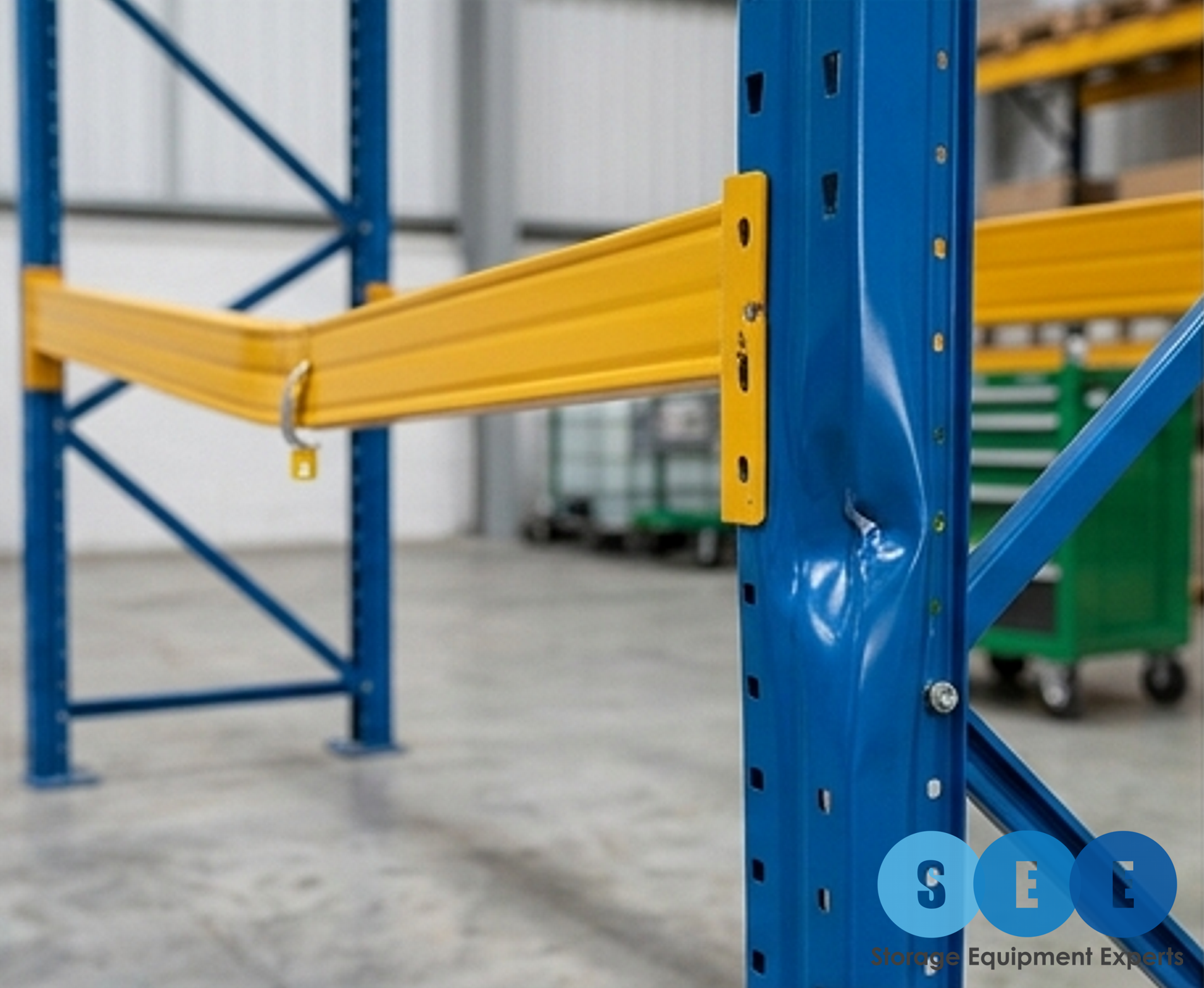
Spotting subtle forms of damage, including frame twists, column denting, front-to-back beam deflections, and damaged beam safety locks.
SEMA risk classifications
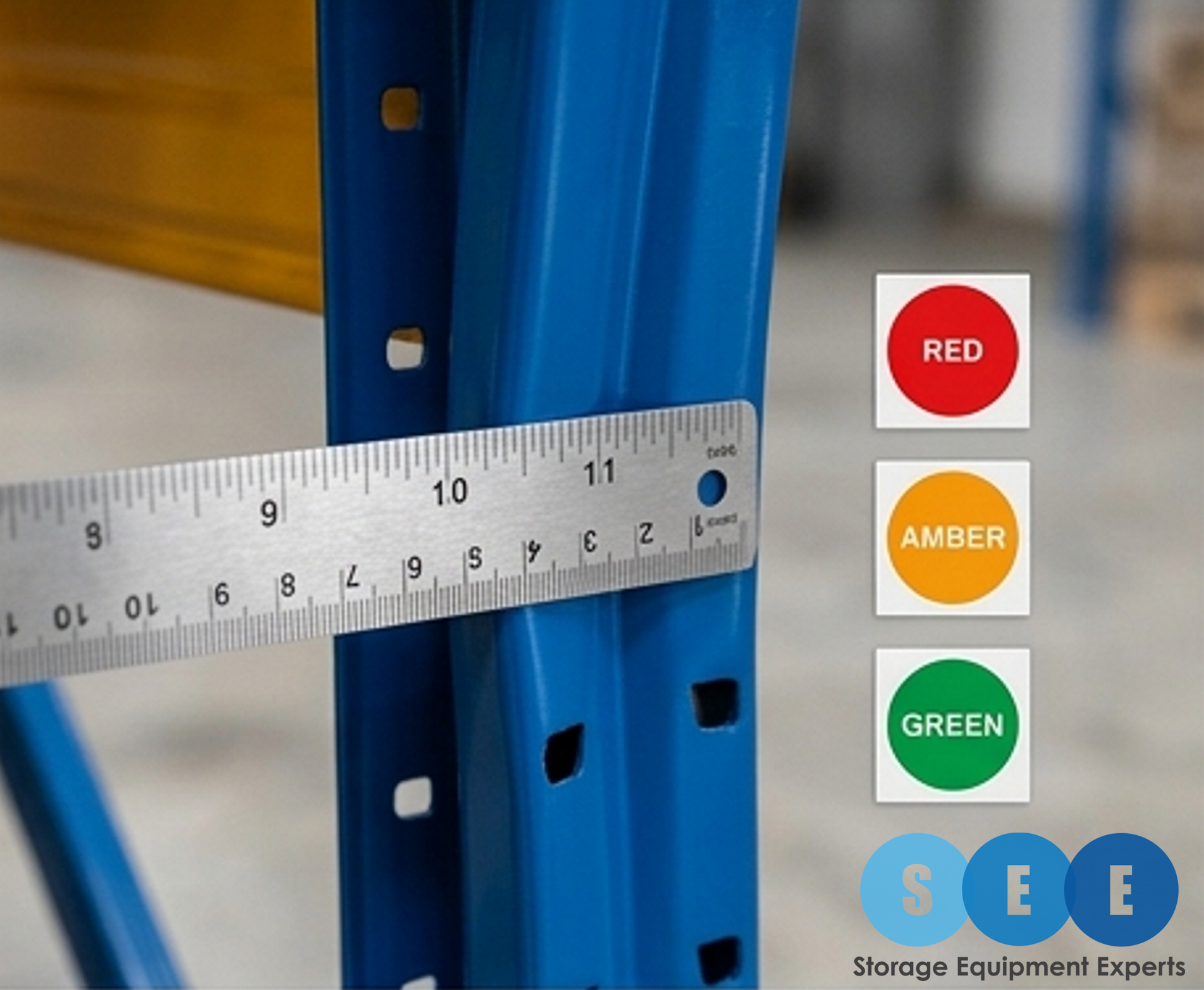
Understanding the exact measurement criteria and allowable tolerances required to classify damage into Red, Amber, and Green risk categories.
Inspection methodologies & logs
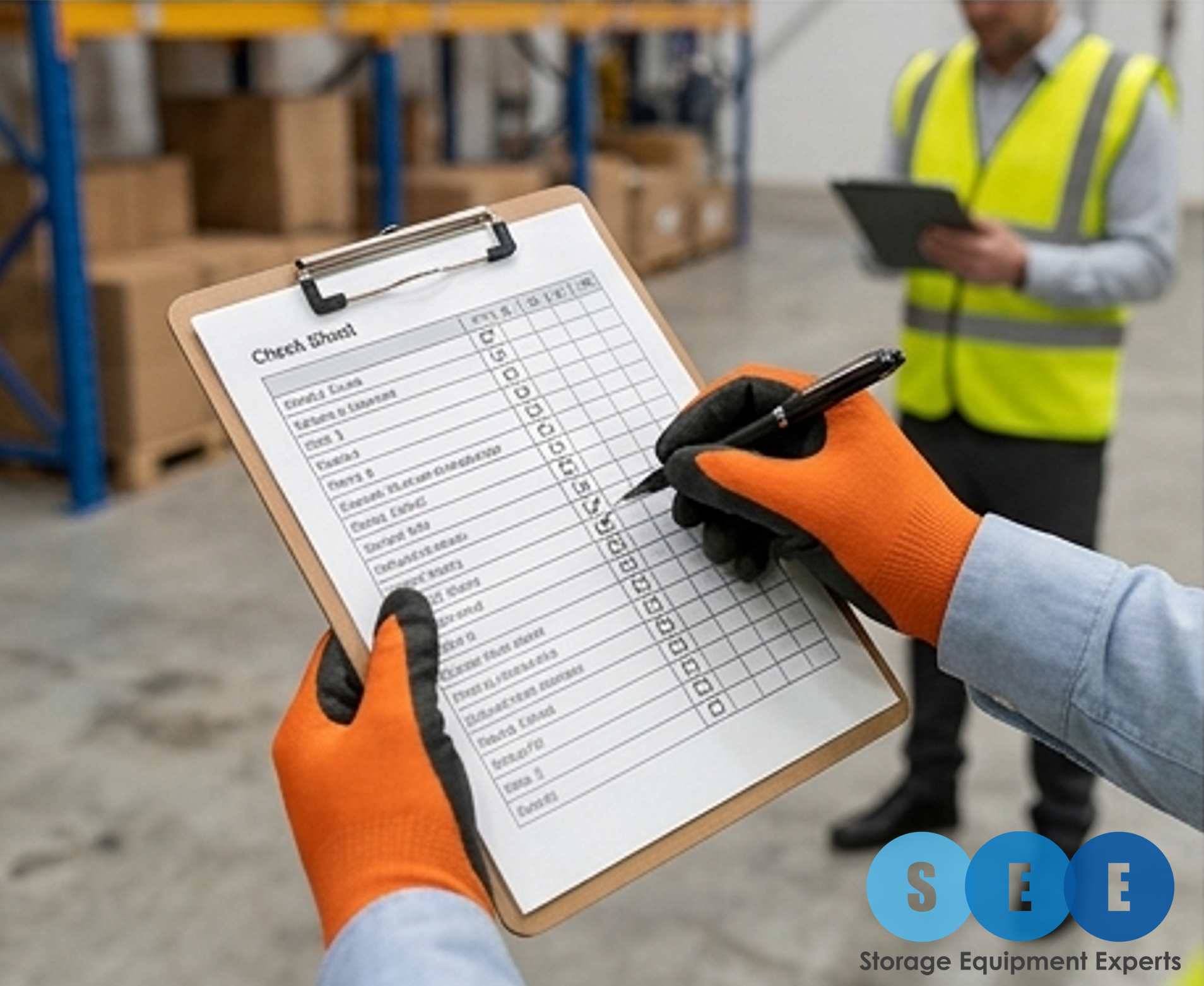
Setting up structured inspection routines (daily, weekly, monthly). Learning how to maintain audit-ready, centralised safety logs and digital records.
Safe operational practices
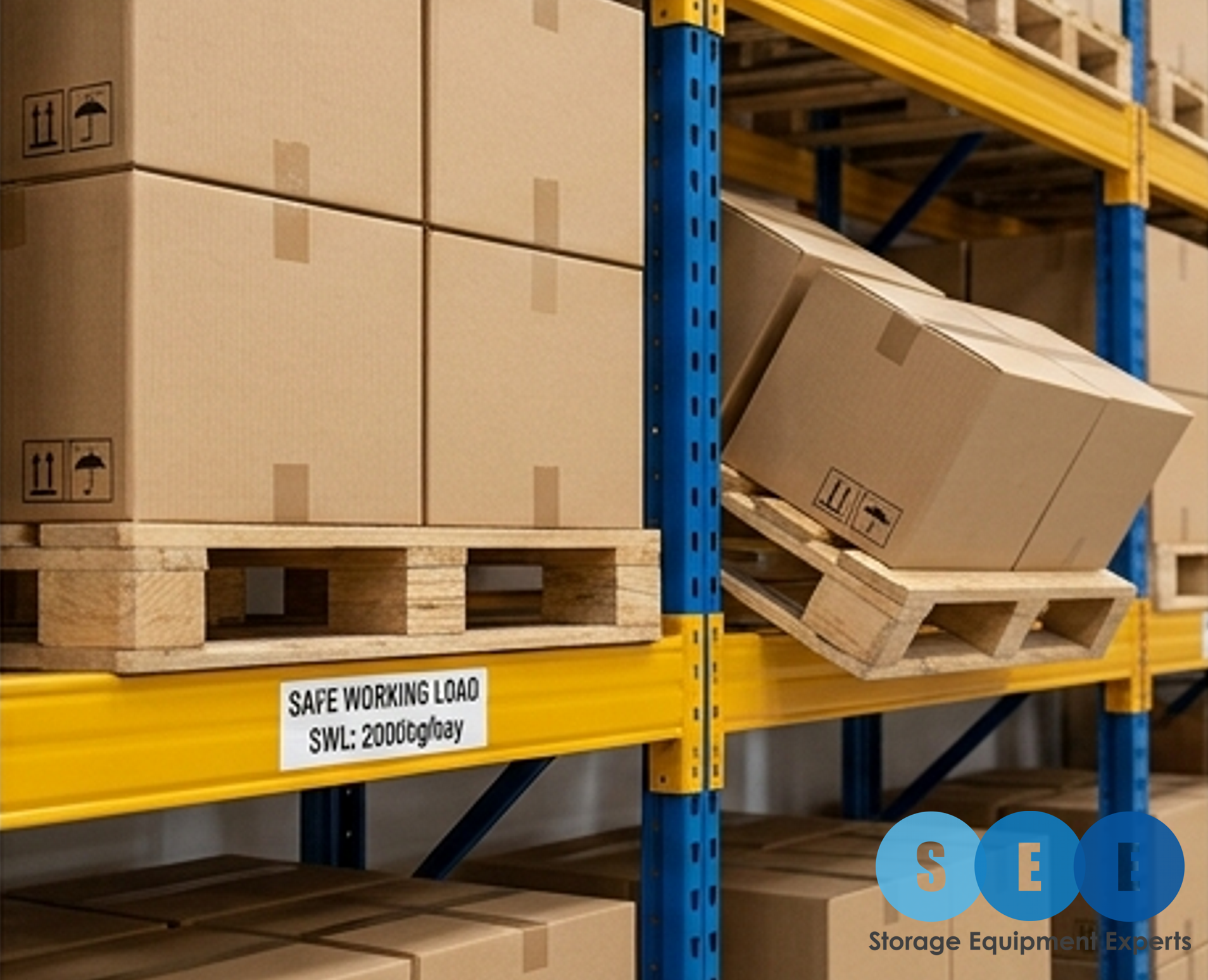
Evaluating pallet condition, pallet placement, load distribution, overhang hazards, and the accuracy of safe working load notices.
Managing maintenance & escalation
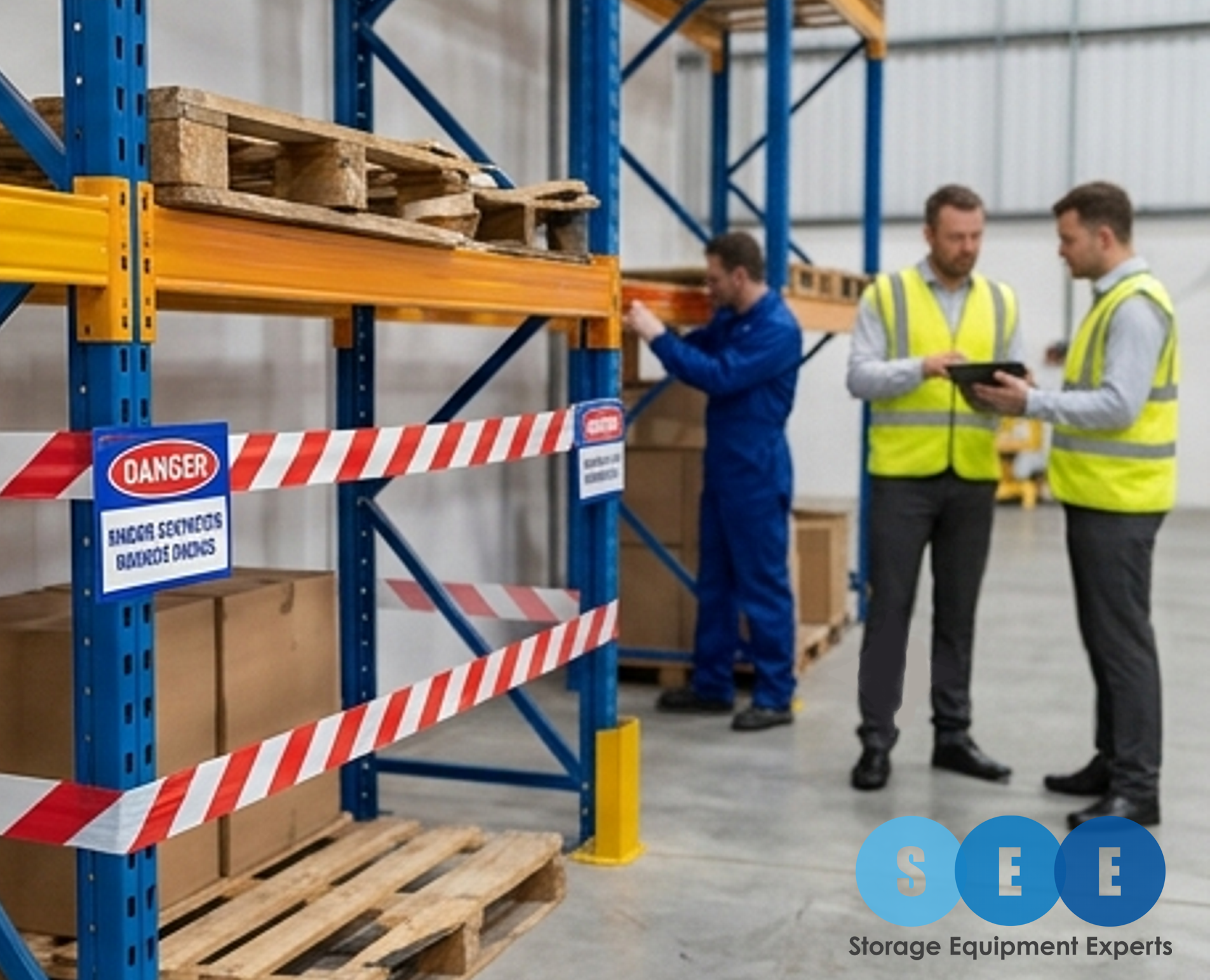
Establishing clear procedures for isolating damaged bays, communicating with repair contractors, and verifying repair quality before signing racking back into service.
The 3-Tier Rack Safety System
Our PRRS training course focuses on a multi-layered, continuous approach to safety as opposed to sporadic checks.
Book professional PRRS training with SEE Racking Inspections
Get in touch with our team and make your warehouse a safer, compliant and more productive space.
SEMA Approved Racking Inspectors
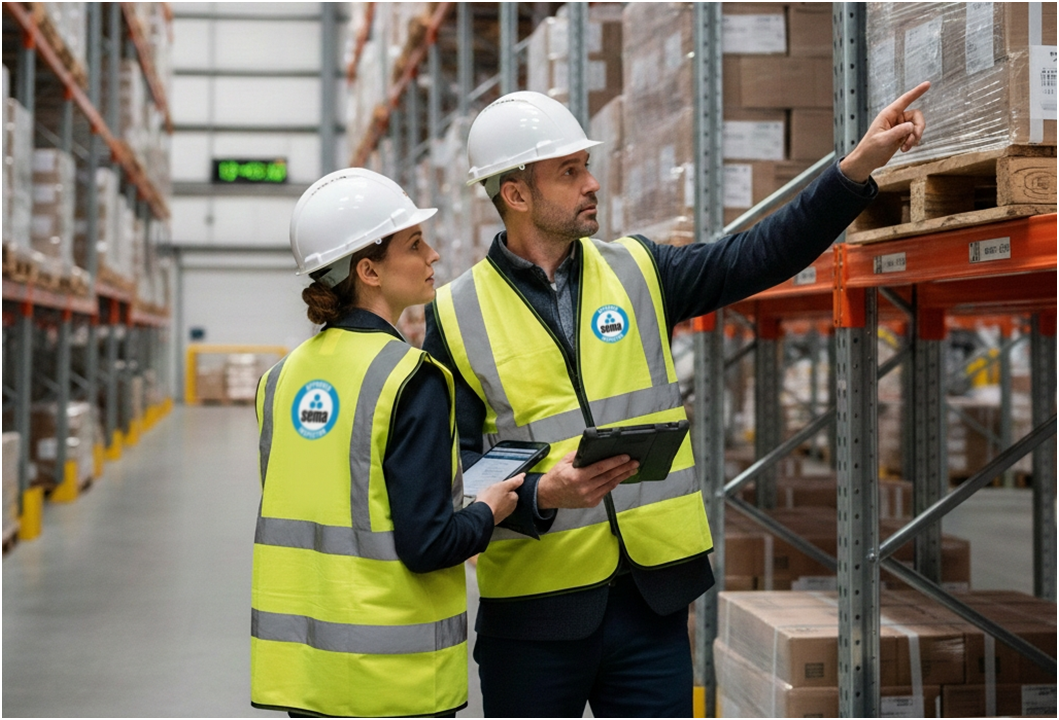
Our SEMA-certified inspectors provide independent, professional racking inspections across the UK & Ireland, ensuring your systems are safe, compliant and fit for use.
Certified Professionals
Highly trained and experienced inspectors.
Detailed Reports
Clear independent findings and actionable advice.
Safety Compliance
Aligned strictly with SEMA & HSE standards.
FAQs
While the specific title “PRRS” is an industry term defined by SEMA, having a designated, competent person responsible for managing work equipment safety is a legal requirement under PUWER 1998 (Regulation 5 & 6) and is explicitly recommended in HSE Guidance HSG76. Appointing a trained PRRS is the standard method accepted by the HSE to demonstrate compliance.
No. Internal inspections conducted by your PRRS and expert inspections carried out by a SARI are complementary, not interchangeable. HSE guidance (HSG76) states that internal routine checks must be supported by an independent expert inspection carried out by a technically competent person (such as a SARI) at intervals not exceeding 12 months.
The frequency of internal inspections depends on your warehouse activity levels, operational throughput and history of damage. SEMA recommends that visual inspections by the PRRS take place weekly or fortnightly. High-throughput facilities operating 24/7 may require more frequent reviews.
To be effective, your PRRS must have the formal management backing to offload and restrict access to damaged racking bays immediately if a “Red Risk” hazard is identified. They must also have a direct line of communication to senior executives to request maintenance budgets for timely repairs.
Yes. In larger facilities, multi-site operations, or shift-based warehouses, training multiple individuals ensures continuous cover during shift rotations, holidays and sickness. However, one primary PRRS should remain overall accountable for maintaining the central safety log.
Any employee working within your logistics or warehouse environment can enroll in our PRRS safety training. While prior technical knowledge is not required, the ideal candidate is someone on the warehouse floor who has the proximity and authority to actively manage day-to-day rack safety.
Daily reporting relies on warehouse operators immediately flagging visible forklift impacts or hazards as they occur. In contrast, a formal PRRS review is a scheduled, structured pallet rack inspection where your designated safety lead systematically checks uprights, beams, safety clips, and load notices, recording all findings in an audit-ready safety log.