
Every warehouse will experience pallet racking damage at some point. The real question isn’t whether damage will happen it’s how quickly and safely you can deal with it.
In many warehouses, damaged racking is isolated, a repair contractor is contacted, and the affected storage location remains out of service until the remedial works can be scheduled. Depending on availability of the required parts and labour, this can take days, weeks or even months, reducing storage capacity and disrupting warehouse operations.
For some businesses, however, there is another option.
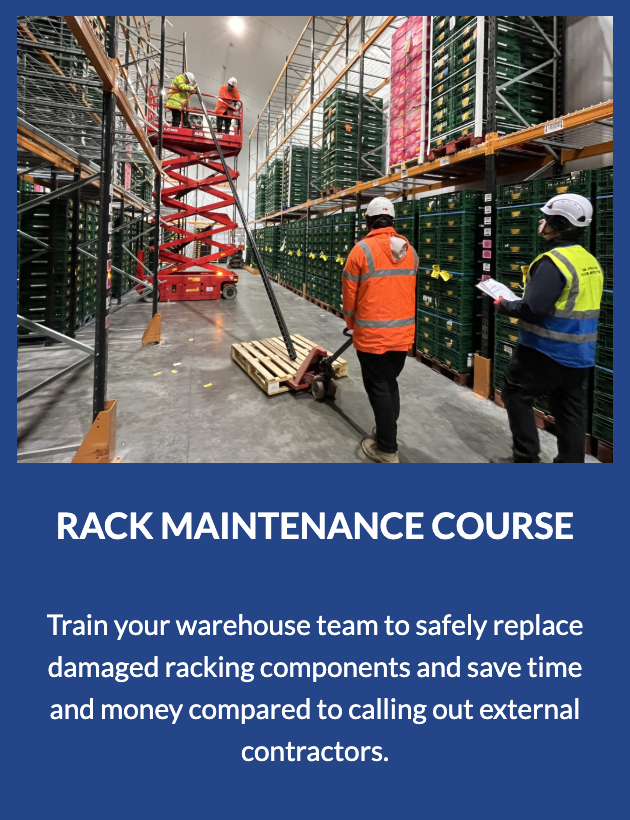
If your warehouse has an in-house maintenance team with the appropriate skills, tools and equipment, investing in professional Rack Maintenance Training can enable your own staff to safely replace damaged pallet racking components, reducing downtime while maintaining high safety standards.
This article explains the five main benefits of investing in rack maintenance training and why it can be an excellent investment for the right type of warehouse.
- Reduce downtime by carrying out many repairs in-house instead of waiting for external contractors.
- Build the competence needed to repair damaged racking safely and in accordance with recognised industry guidance.
- Improve hazard identification and strengthen your warehouse safety culture.
- Make better use of your existing maintenance team and equipment.
- Integrate repairs seamlessly with your existing racking inspection programme.
1. Significantly reduce downtime and operational disruption
For most warehouses, damaged pallet racking means one thing reduced storage capacity.
Once damage has been identified, the affected area should be unloaded and isolated until it has been assessed and any remedial works completed. While this protects people and equipment, it can also create operational challenges, particularly in busy warehouses where every pallet location is valuable.
If remedial works rely entirely on external contractors, damaged bays may remain out of service while waiting for remedial works to be scheduled.
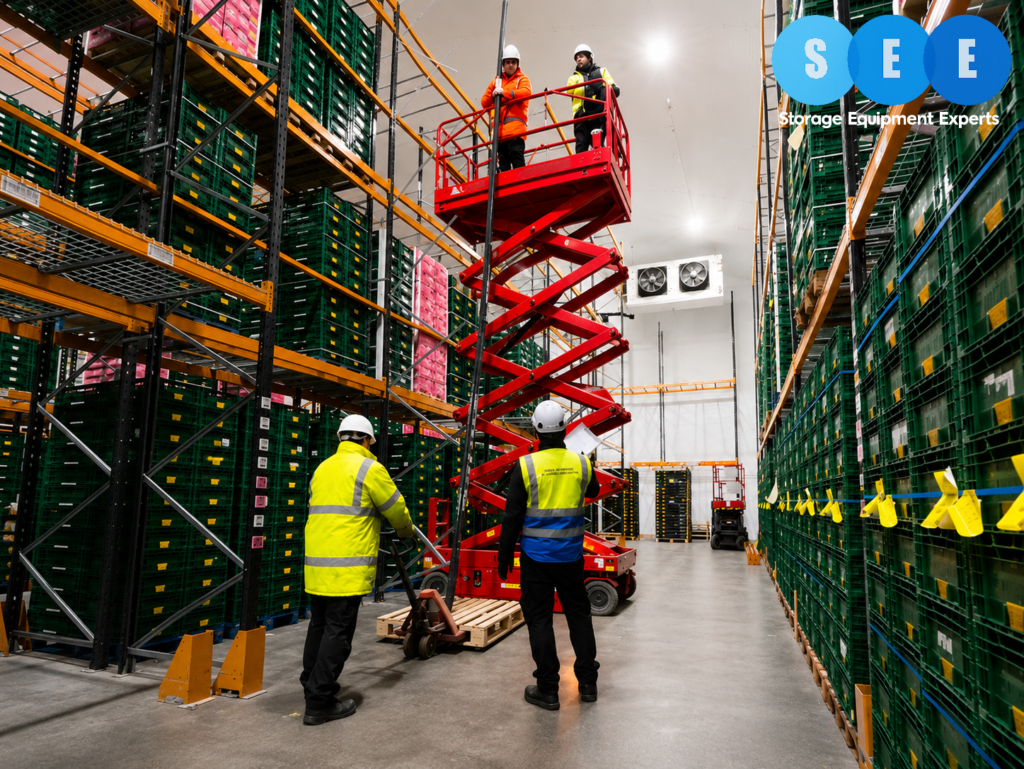
Businesses with trained in-house maintenance personnel can often restore damaged locations much sooner. Rather than waiting for contractor availability, remedial works can be completed as soon as replacement components are available and safe systems of work have been established.
For warehouses where forklift activity regularly results in minor racking damage, this can significantly reduce operational disruption and help maintain storage capacity.
2. Strengthen Compliance and Improve Repair Standards
Warehouse operators have a responsibility to ensure pallet racking is maintained in a safe condition.
BS EN 15635, the recognised European standard for the application and maintenance of steel static storage systems, requires racking to be inspected and maintained by competent people.
Professional Rack Maintenance Training helps develop that competence.
Rather than relying on improvised repairs or guesswork, delegates learn recognised methods for replacing damaged components safely and correctly. Training covers topics including:
- BS EN 15635 requirements
- recognised SEMA best-practice guidance
- damage classification
- safe systems of work
- PPE requirements
- working at height considerations
- correct component replacement procedures
Successful delegates receive a Certificate of Attendance, demonstrating that they have completed structured training in rack maintenance procedures.
3. Improve Hazard Identification and Reduce Risk
Good rack maintenance involves much more than replacing damaged steelwork.
Maintenance personnel also need to understand how pallet racking behaves under load, recognise when damage creates a structural risk and appreciate when components should and should not be replaced.
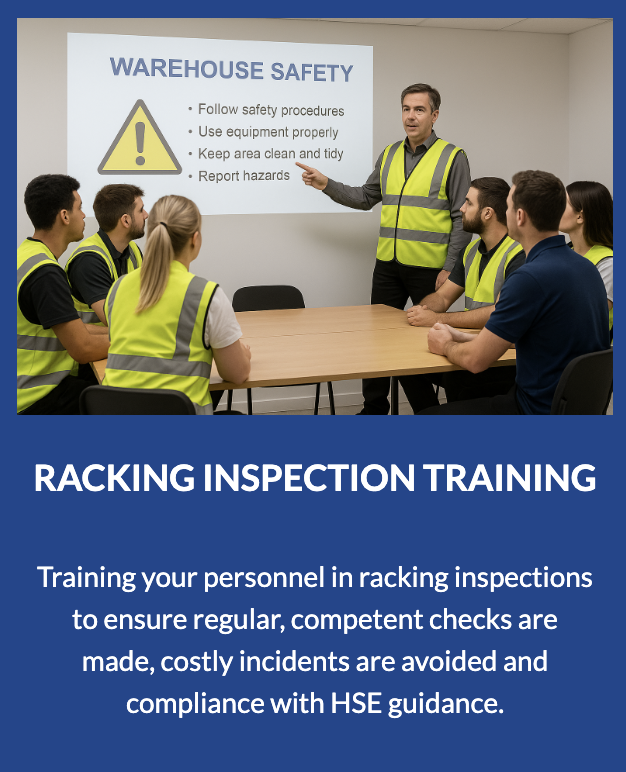
A quality training course combines classroom learning with practical exercises, helping delegates understand:
- why and how racking components can fail
- how damaged racking affects structural integrity
- how to identify unsafe conditions
- when remedial worksare appropriate
- when specialist advice is required
This broader understanding helps maintenance teams make better decisions and contributes to a stronger overall safety culture throughout the warehouse.
4. Make the Most of your Existing Maintenance Team
Not every warehouse is suitable for carrying out its own rack repairs.
The businesses that benefit most are typically larger or busier warehouses with substantial pallet racking installations and an established in-house maintenance team.
These maintenance teams already spend their time maintaining the building, machinery, services and other equipment. They generally possess many of the practical skills needed for rack maintenance, including:
- using hand and power tools
- working safely at height
- operating scissor lifts or similar access equipment
- removing and replacing heavy steel components
- following permit-to-work and risk assessment procedures
- working safely as a small maintenance team
Rack maintenance builds on these existing skills by providing the specialist knowledge required to work safely on pallet racking systems.
This differs significantly from warehouses without dedicated maintenance personnel. In those environments, employees often lack the equipment, practical experience or working-at-height competence needed to carry out structural repairs safely. In these situations, using a specialist external repair contractor is generally the most appropriate solution.
For suitable organisations, however, training just three to six maintenance personnel can create a highly responsive internal capability that reduces reliance on external contractors and helps return damaged storage locations to service more quickly.
5. Integrate Repairs with your Existing Racking Safety Programme
An in-house maintenance capability should complement not replace your existing warehouse safety procedures.
Independent expert inspections remain an important part of maintaining pallet racking safety. When inspections identify damaged components requiring replacement, a trained maintenance team can act quickly by:
- reviewing the inspection report
- sourcing the correct replacement components
- carrying out remedial workssafely
- returning the racking to service where appropriate
This creates a joined-up approach to warehouse safety.
Damage is identified through routine inspections and immediate reporting by warehouse staff, assessed by competent people and, where appropriate, repaired promptly by trained maintenance personnel.
The result is a more efficient maintenance process and a stronger overall safety management system.
Is Rack Maintenance Training Right for your Warehouse?
Rack Maintenance Training is not intended for every warehouse.
It is best suited to businesses that:
- have a large amount of pallet racking
- experience regular forklift activity and occasional racking damage
- employ an in-house maintenance or engineering team
- already use scissor lifts or similar access equipment
- want to reduce downtime and reliance on external contractors
For smaller warehouses without dedicated maintenance personnel, specialist external repair contractors are often the most practical solution.
Develop your in-house Rack Maintenance Capability with SEE Racking Inspections
The SEE Rack Maintenance Training Course has been specifically developed for warehouse maintenance teams who want to carry out many common rack remedial workssafely and competently.
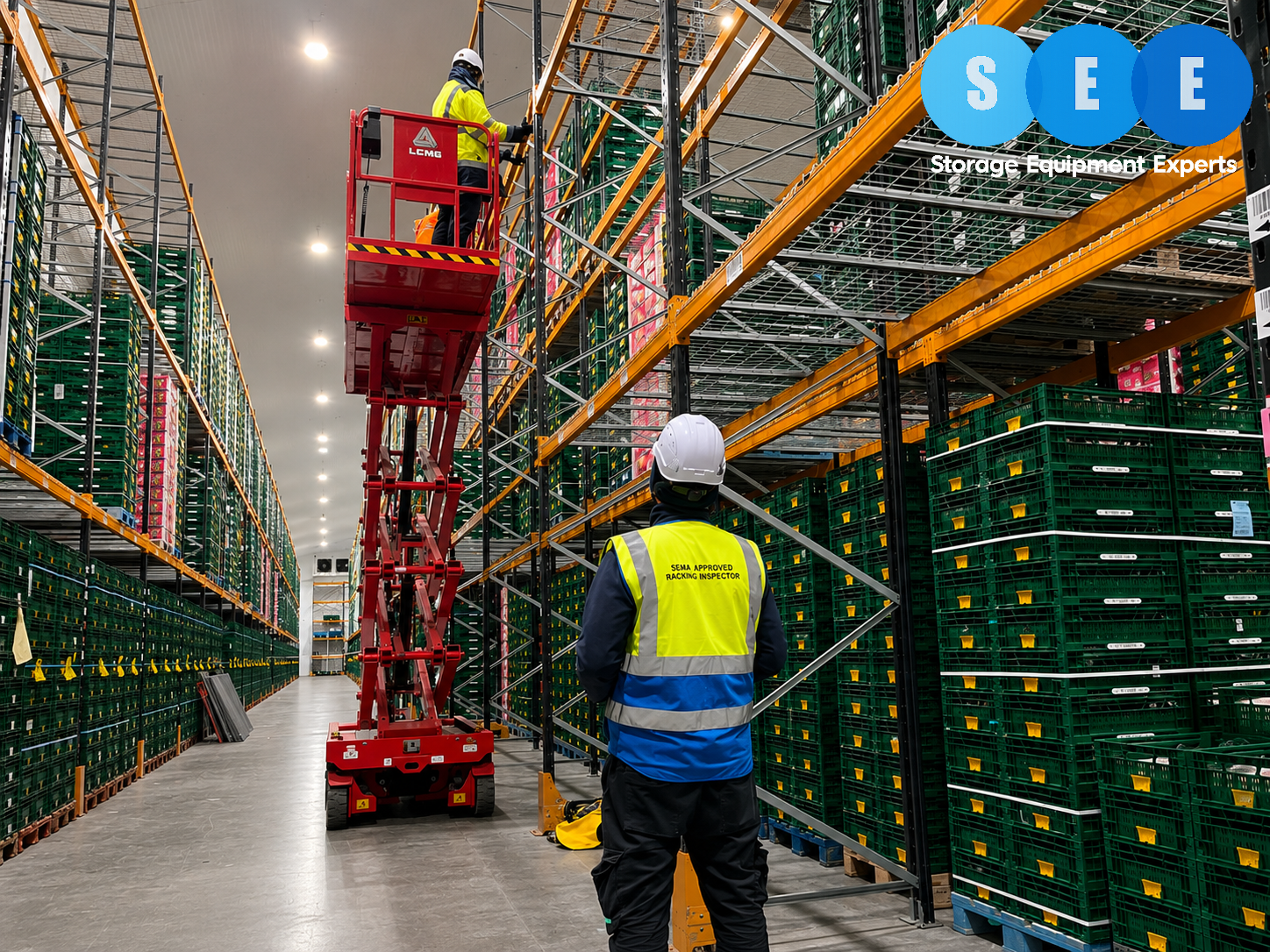
Delivered on-site at your own warehouse, the course combines classroom learning with practical training carried out on your own pallet racking.
Delegates learn recognised maintenance techniques, damage assessment, safe systems of work and the practical removal and replacement of components such as uprights, beams, bracing and frame fixings under the supervision of an experienced SEMA Approved Rack Inspector (SARI).
Courses are completed in one day and delivered to groups of a minimum of three and maximum of six delegates, allowing plenty of practical involvement and discussion.
If your warehouse already has an experienced maintenance team, investing in professional Rack Maintenance Training can reduce operational downtime, strengthen your safety management system and give your business the confidence to deal with many common racking repairs more quickly.
Contact SEE Racking Inspections to find out whether Rack Maintenance Training is the right solution for your warehouse.
FAQs
1. What is rack maintenance training?
Rack maintenance training teaches suitable warehouse maintenance personnel how to assess racking damage and carry out appropriate remedial work safely using recognised procedures and equipment.
2. What does rack maintenance training cover?
Training may cover damage assessment, damage classification, safe systems of work, PPE, working at height considerations and the removal and replacement of appropriate racking components.
3. Who should attend rack maintenance training?
The training is generally most suitable for experienced warehouse maintenance or engineering personnel who already have relevant practical skills and access to the equipment needed to carry out maintenance work safely.
4. Can rack maintenance training replace a racking inspection?
No. Rack maintenance training does not replace the need for a suitable racking inspection programme. Inspection identifies damage and safety issues, while maintenance deals with appropriate remedial work. Expert inspections remain a separate activity carried out by a technically competent person.
5. Is rack maintenance training suitable for every warehouse?
No. It is generally more appropriate for warehouses with substantial racking, regular forklift activity and an experienced in-house maintenance or engineering team. Smaller warehouses without suitable maintenance resources may be better served by a specialist external repair contractor.