
It’s fairly common in the warehousing sector for pallet racking to be viewed as industrial furniture, with racking systems generally considered to be sturdy and permanent structures. Unfortunately, this view tends to gloss over the immense stress, accidental impacts and perpetual wear that these systems experience. The fact of the matter is racking systems go wrong, and when they do, it can be disastrous for your operations, staff and business.
A single upright failure can result in major stock loss, operational disruption and potential risk to life. In the aftermath of such an event, the first person to knock on your door won’t just be the Health and Safety Executive, it’ll be your insurance loss adjuster, who’ll scrutinise your safety training records. In this article, we’re going to look at why SEMA-approved training is the essential foundation for maintaining both your warehouse safety and your insurance compliance.
Key takeaways
Legal Expectation: Under HSG76, UK businesses should appoint a “Person Responsible for Racking Safety” (PRRS) who is suitably trained and competent.
Risk Mitigation: Insurance providers view SEMA standards as the recognised benchmark for professional competence and effective risk reduction.
Claim Protection: Failing to provide evidence of appropriate training and inspection processes can put insurance claims at risk following a collapse.
Cost Efficiency: Internal inspections by properly trained staff help catch minor damage before it escalates into costly, catastrophic failures.
Unbiased Safety: Independent inspections help keep safety advice objective as opposed to being opportunities to sell equipment.
The regulatory arena: HSG76
To understand why insurers and regulators place such importance on racking safety, we need to look at the legal framework behind it. The HSE’s guidance document, HSG76 (Warehousing and Storage: A Guide to Health and Safety), recommends that racking is inspected at three distinct levels to ensure ongoing safety and structural integrity:
Immediate reporting: All staff should report any damage as soon as it’s identified. This includes impacts from forklifts, bent uprights, or missing components, ensuring issues are flagged before they worsen.
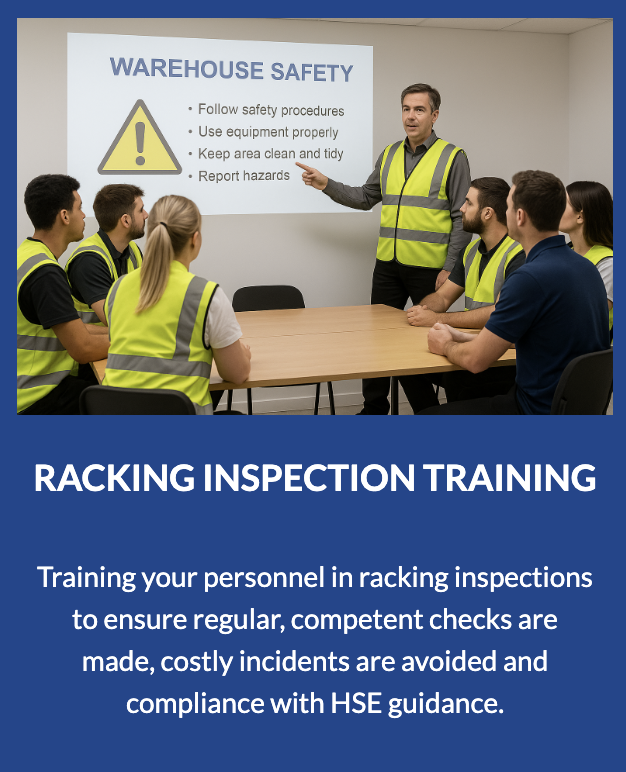
Visual inspections: Regular inspections (typically carried out weekly), should be conducted by a designated Person Responsible for Racking Safety (PRRS) or another warehouse operative that has completed a racking inspection training course. These checks focus on identifying visible damage, making sure loads are correctly positioned and confirming that safety procedures are being followed.
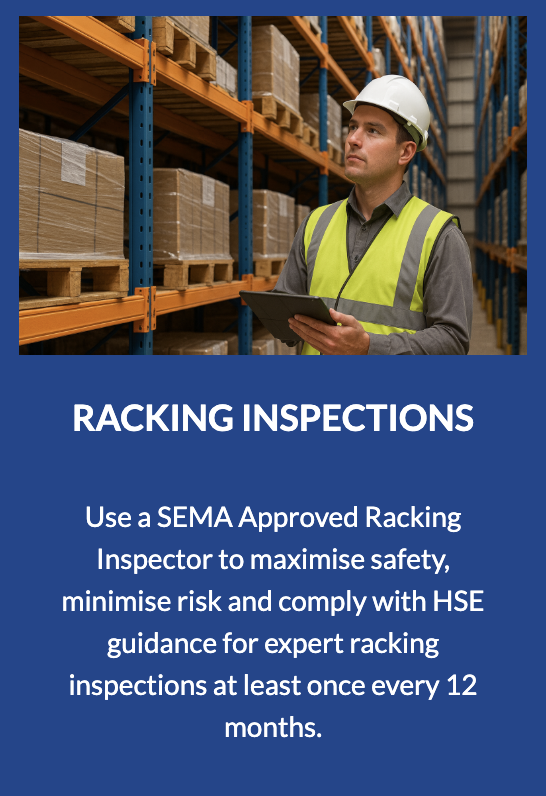
Expert inspections: At least once a year, a technically competent specialist – such as a SEMA Approved Racking Inspector (SARI) – should carry out a detailed, formal assessment of the installation.
While these recommendations are guidance as opposed to strict legal requirements, they’re widely recognised as the benchmark for good practice. As a result, businesses need to be able to demonstrate that their PRRS is appropriately trained and capable of fulfilling this role effectively.
The insurance perspective: Risk vs. competence
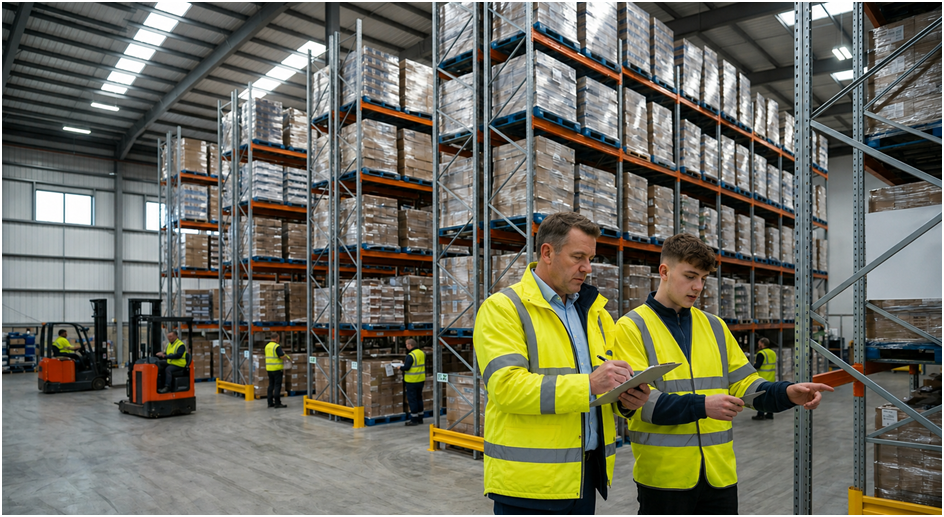
At its heart, insurance is about risk management. When an insurer underwrites a warehouse, they’re assessing whether your safety systems are effective enough to prevent loss.
The competent person principle
Most commercial insurance policies require that safety-critical tasks are carried out by a competent person. Context of warehouse racking inspections, competence means having the knowledge and ability to identify damage and assess risk appropriately.
The widely used SEMA traffic light system provides a clear framework for this:
- Green: Minor damage (monitor)
- Amber: Damage requiring repair within 4 weeks from detection
- Red: Severe damage (offload and isolate immediately)
SEMA training is one of the most recognised ways of developing this competence. Without this kind of training, assessments may become inconsistent or difficult to justify if challenged.
Validation of claims
In the event of a racking failure, insurers will often review maintenance records and inspection logs. They’ll look for:
- Evidence of regular inspections.
- Clear reporting systems.
- Documentation showing that inspections were carried out by a competent individual.
- Evidence that required remedial works were carried out
If these elements are missing, insurers may question whether reasonable care was taken, which can severely affect the outcome of a claim.
The financial impact of compliance
While training is sometimes viewed as an overhead, it’s more accurately defined as a cost-effective investment in risk reduction. Properly trained staff are simply better equipped to identify developing issues before they escalate. Beyond the insurance considerations that can arise from a lack of proper training, the wider costs of poor racking safety can also include:
HSE intervention fee: Charged where material breaches of safety law are identified.
Increased premiums: Insurers may adjust premiums based on perceived risk and safety standards.
Business interruption: Operational downtime, reputational damage and loss of contracts.
SEMA: The industry benchmark
In the UK, SEMA is the leading authority on the design, installation and inspection of storage equipment. Its training programmes provide a structured approach to understanding racking safety, with training typically covering areas such as:
- Principles of load distribution
- The effects of floor conditions and alignment
- Different racking systems (e.g. APR, Drive-In, Cantilever)
- Relevant safety regulations, including PUWER
Aligning your training with SEMA standards provides a clear, objective way to demonstrate competence to insurers, auditors and regulators.
Moving beyond tick-box safety
Having an engrained safety culture is often what separates a resilient warehouse operation from a high-risk one. Rather than treating inspections as a formality, businesses should embed safety into their daily routines and decision-making.
For warehouse staff: Training builds the confidence to report damage early and accurately, helping prevent minor issues from escalating into serious risks.
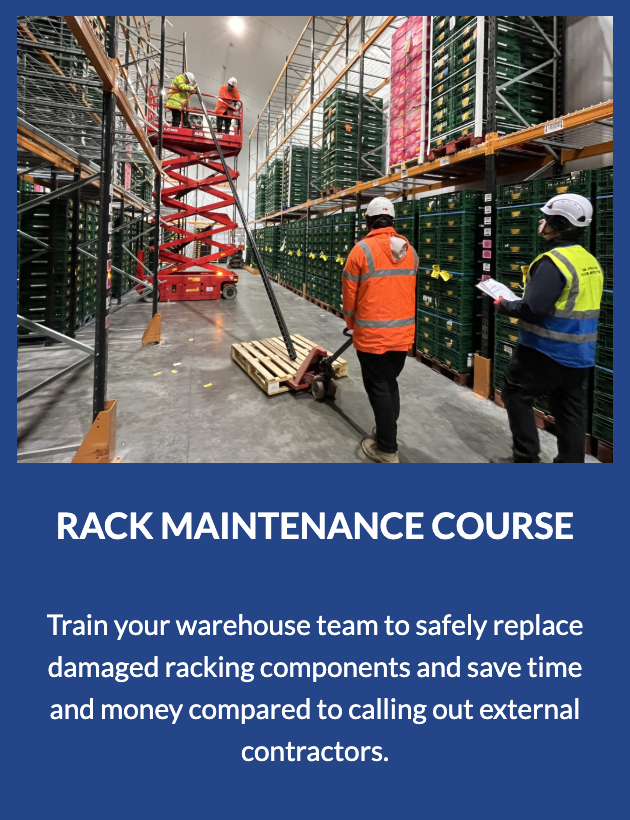
For maintenance teams: It supports informed, standards-based decisions, reducing reliance on unsafe quick-fix repairs that can compromise structural integrity over time.
How SEE Racking Inspections can help
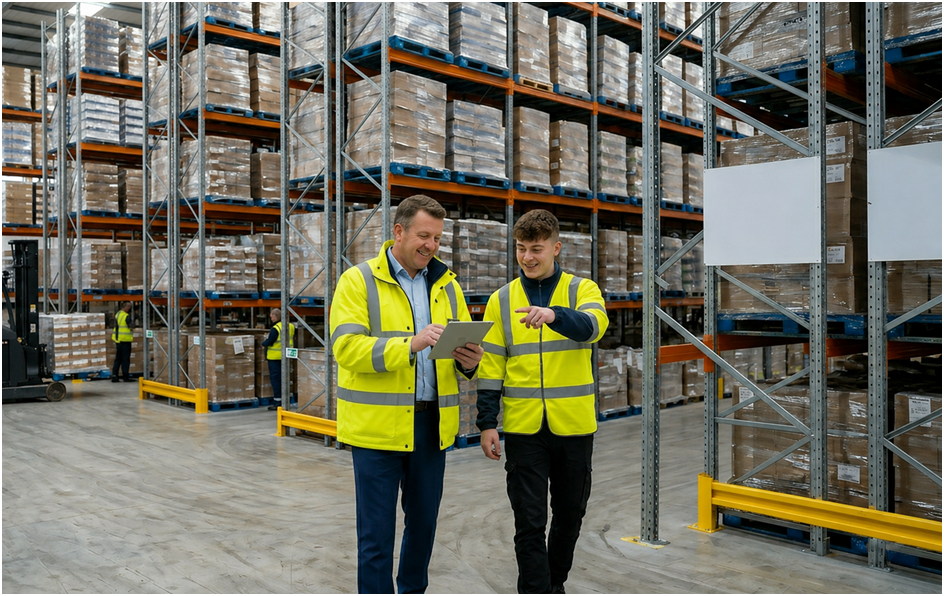
At SEE Racking Inspections, we don’t just point out problems. We provide the training needed to prevent them in the first place. As independent, SEMA-approved inspectors, we offer nationwide coverage across the UK and Ireland, focused entirely on safety. Because we don’t sell racking, our advice is 100% unbiased. In short, we’re about compliance, not commissions.
Our comprehensive pallet racking inspections and bespoke racking inspection training help keep your teams safe, your insurance valid and your business in healthy shape. Get in touch with SEE Racking Inspections and turn safety compliance from a cost into an asset.
FAQs
Training helps staff identify damage, assess concerns and document inspections consistently. These records can help demonstrate how your business manages racking risks.
Do not assume that every policy requires SEMA training. Check your policy wording and ask your insurer or broker which qualifications, inspections and records they require.
No. Training supports routine internal checks and damage reporting. Expert inspections provide a separate, detailed assessment of the racking installation.
Understanding green, amber and red classifications helps staff recognise the seriousness of damage, report findings clearly and follow the appropriate action procedures.