Why ASRS Inspections Matter: A Simple Guide to Staying Safe and Compliant with HSG76

Modern warehouses are changing fast. Automated Storage and Retrieval Systems (ASRS) and high-bay pallet racking systems help businesses store more products, improve efficiency, and reduce manual handling. But with automation comes responsibility, especially when it comes to safety inspections.
For many warehouse operators, terms like ASRS, PRRS, high-bay racking, and HSG76 can sound technical and confusing. This guide explains everything in simple language, helping warehouse managers, operations teams, and business owners understand why regular ASRS inspections are essential.
What Is an ASRS System?
An Automated Storage and Retrieval System (ASRS) is a warehouse storage system that uses machines, conveyors, cranes, or robots to automatically place and retrieve pallets or products from racking.
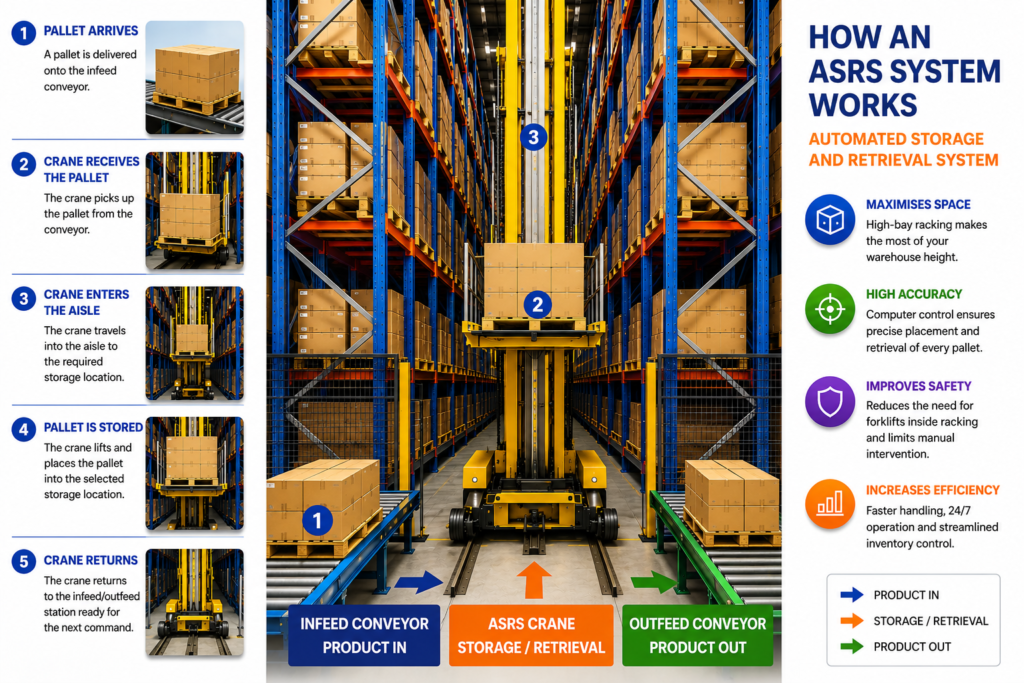
In simple terms:
- Instead of forklift drivers manually moving pallets,
- The automated system handles storage and retrieval,
- Often inside very tall racking structures.
These systems are commonly found in:
- Distribution centres
- Cold storage warehouses
- Manufacturing facilities
- E-commerce fulfilment centres
- High-volume logistics operations
Because ASRS systems often operate at height and behind safety fencing, damage or wear can go unnoticed without proper inspections.
What Is HSG76?
HSG76 – Warehousing and Storage: A Guide to Health and Safety is official guidance published by the UK Health and Safety Executive (HSE). It provides practical advice on keeping warehouse operations safe.
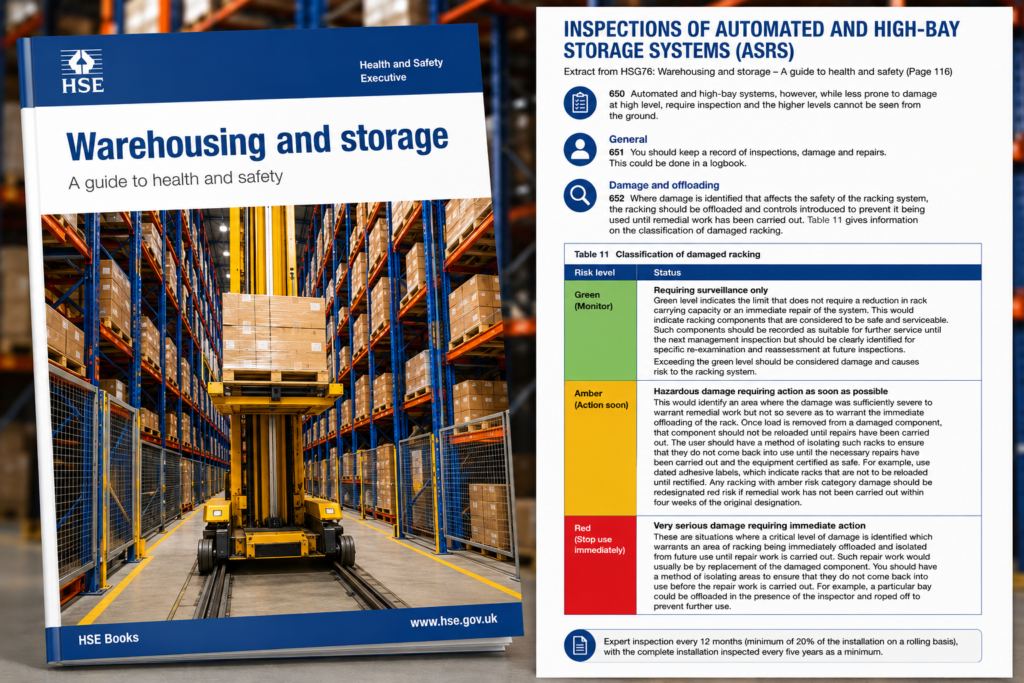
The guidance specifically highlights the importance of inspecting automated and high-bay racking systems.
According to HSG76:
“Automated and high-bay systems, however, while less prone to damage at high level, require inspection and the higher levels cannot be seen from the ground.”
This means that even if damage is not immediately visible, it may still exist, and hidden damage can create serious safety risks.
Why Do ASRS Systems Need Regular Inspections?
Many businesses assume that because ASRS systems reduce forklift impacts, they require less attention. While automation may reduce some risks, it introduces others.
Common Issues Found During ASRS Inspections
Regular inspections can identify:
- Bent or damaged racking uprights
- Loose or missing fixings
- Impact damage
- Misaligned rails
- Fatigue cracks
- Damaged bracing
- Corrosion
- Wear caused by automated cranes or shuttles
- Structural movement over time
- Damaged pallets or incorrect types of pallets stored in system
- Issues caused by loads on pallets
Without inspections, small problems can develop into major failures.
The Hidden Risk with High-Bay Racking
One of the biggest challenges with ASRS systems is visibility.
Unlike conventional pallet racking, ASRS systems are often:
- Extremely tall
- Enclosed
- Restricted-access
- Operating continuously
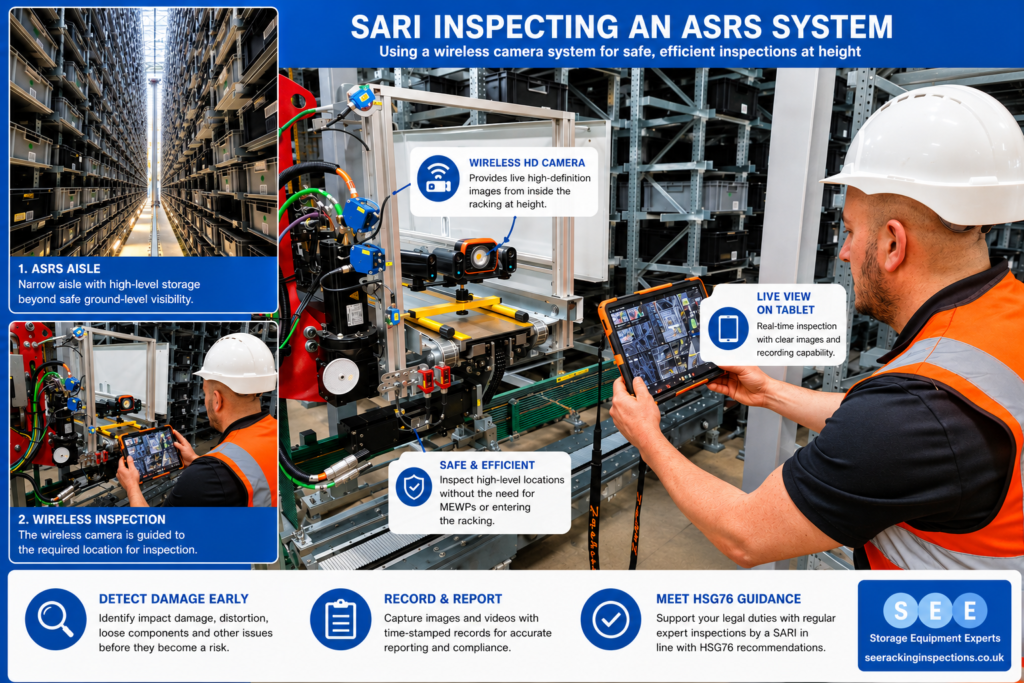
HSG76 warns that upper levels cannot usually be inspected from ground level.
This means specialist inspection methods are often required, including:
- Elevated access equipment
- Drone-assisted inspections
- Detailed structural assessments
- Specialist rack inspection reports
What Does HSG76 Recommend?
HSG76 recommends a formal inspection process for automated racking systems. The guidance includes:
1. Immediate Reporting of Problems
Warehouse teams and maintenance engineers should report any signs of damage immediately so trends and recurring issues can be identified. A reporting system should be in place to record and issues.
2. Expert Inspections Every 12 Months
An expert inspection every 12 months consisting of a minimum of 20% of theinstallation carried out on a rolling basis so that the complete installation isinspected every five years as a minimum requirement.
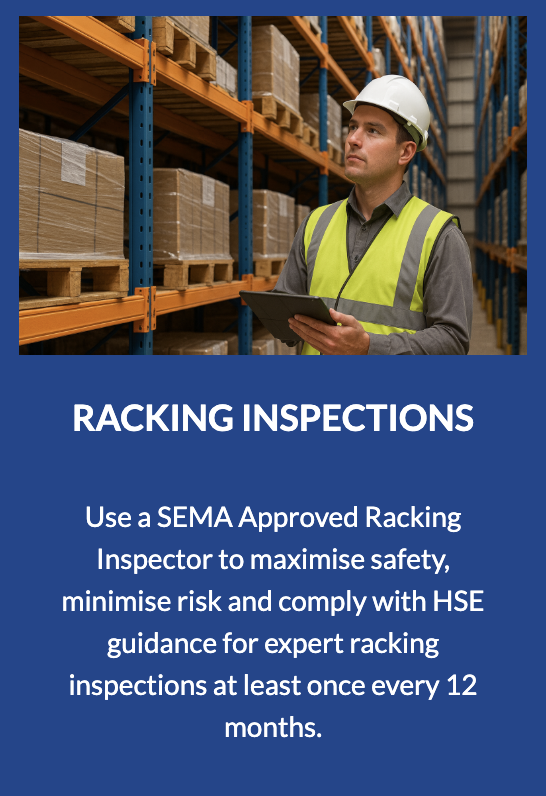
These inspections should be carried out by a competent person, such as a SARI (SEMA Approved Racking Inspector).
3. Ongoing Rolling Inspections
HSG76 advises that inspections should be carried out on a rolling basis so the entire installation is inspected over time.
4. Keeping Inspection Records
Businesses should maintain records of:
- Inspections
- Damage reports
- Repairs
- Risk classifications
The HSE states these records should be kept in a logbookand reviewed by the PRRS (Person Responsible for Racking Safety)to identify if a more wide-ranging inspection or other action is necessary.
Understanding Rack Damage Risk Levels
HSG76 classifies rack damage into three categories:
Green Risk – Monitor Only
Minor issues that are safe for continued use but should be monitored during future inspections.
Amber Risk – Action Required Soon
Damage serious enough to require corrective action as soon as possible.
Affected areas should not be reloaded until repairs are completed.
Red Risk – Immediate Action Required
Severe damage creating an immediate safety risk.
The affected area should be unloaded immediately and isolated from use until repaired.
Who Is Responsible for ASRS Safety?
Under UK health and safety law, warehouse operators and employers are responsible for ensuring storage systems remain safe.
This includes:
- Conducting regular inspections
- Maintaining the racking system
- Repairing damage promptly
- Keeping safety records
- Ensuring staff report defects
Failing to manage racking safety can lead to:
- Product damage
- Downtime
- Injuries
- Prosecution
- Insurance complications
Why Professional Rack Inspections Matter
ASRS systems are specialist installations that require specialist knowledge.
A professional rack inspection helps:
- Identify hidden structural issues
- Reduce risk of collapse
- Improve compliance with HSG76
- Support insurance requirements
- Reduce operational downtime
- Extend the life of the installation
At SEE Racking Inspections, we provide independent inspections for:
- ASRS systems
- High-bay racking
- Pallet racking
- Shuttle systems
- Automated warehouses
- Industrial storage systems
Signs Your ASRS System May Need Attention
You should arrange an inspection if you notice:
- Unusual noises from automated cranes
- Damaged rack protectors
- Misaligned pallets
- Leaning racking
- Visible impact damage
- Repeated faults in automated equipment
- Missing safety signage
- Loose floor fixings
- Increased maintenance issues
Even small signs can indicate larger structural problems.
How Often Should ASRS Systems Be Inspected?
A good inspection programme usually includes:
| Inspection Type | Recommended Frequency |
| Visual internal checks | Weekly |
| In-house formal inspection | Monthly |
| Expert SARI inspection | Every 12 months (minimum of 20% of the system) |
| Additional inspections | After impacts, changes to the system or other concerns |
High-activity warehouses may require more frequent inspections.
Final Thoughts
Automated warehouse systems improve efficiency, but they do not remove the need for safety inspections.
In fact, because ASRS systems operate at height and much of the structure is hidden from view, inspections become even more important.
HSG76 clearly recommends that experts inspect equipment, keep records, and take prompt action when they identify damage.
By investing in regular ASRS inspections, businesses can:
- Protect employees
- Reduce downtime
- Stay compliant
- Avoid costly failures
- Improve warehouse safety
Need an ASRS Inspection?
SEE Racking Inspections provides professional rack inspections across the UK for automated storage systems, pallet racking, and warehouse storage equipment.
Contact us today to discuss your ASRS inspection requirements and ensure your warehouse remains safe, compliant, and operational.