
As safe as your warehouse racking may appear, there are an estimated 700 racking collapses in the UK every year. That’s 2 a day, resulting in costs of approximately £1.5 billion in replacements, repairs, lost inventory, and, perhaps most importantly, legal claims.
The Health and Safety Executive (HSE) makes it clear that ignorance of the law is no defence. Whether you’re a warehouse manager or a business owner, understanding the interplay between HSE guidance, PUWER regulations and SEMA standards is central to staying compliant.
In this article, we’re going to walk you through the main points you need to know and how companies like SEE Racking Inspections can keep your warehouse from joining that unfortunate list of 700.
Key takeaways
- Racking is typically treated as work equipment: In most warehouse environments, pallet racking falls within the scope of the Provision and Use of Work Equipment Regulations 1998 (PUWER), meaning it must be suitably maintained and inspected by competent persons.
- A three-tier inspection approach is recommended: Compliance is commonly achieved through a combination of regular visual checks, periodic in-house reviews, and an annual inspection by a competent specialist.
- Appointing a PRRS is strongly recommended: Warehouses are encouraged under HSE guidance to appoint a Person Responsible for Racking Safety (PRRS) to oversee inspections, repairs and reporting processes.
- Follow the SEMA Traffic Lights: Damage is typically categorised using the widely adopted system developed by the Storage Equipment Manufacturers’ Association (SEMA): Green (monitor), Amber (repair within a defined timeframe) and Red (immediate action required).
- Independent oversight is vital: Using an independent inspector means your safety check is unbiased, focusing purely on safety and compliance (as opposed to using it as an opportunity to sell you racking products).
The legal foundation: Health and Safety at Work etc Act 1974
Every safety discussion in the UK begins with the Health and Safety at Work etc. Act 1974. This act places a “duty of care” on employers to safeguard the health, safety and welfare of their employees (as far as is reasonably practical).
In a warehouse context, this means the environment including storage systems must be safe for use under day-to-day operating conditions. If a racking system collapses due to neglected maintenance or inadequate oversight, the business (and potentially its directors) can be held liable. The 1974 Act acts as the umbrella under which more specific regulations sit, giving the HSE the power to issue improvement notices or prosecute where necessary.
PUWER 1998: Racking as work equipment
The Provision and Use of Work Equipment Regulations 1998 (PUWER) is one of the most important regulations for racking safety. While often associated with machinery, PUWER applies more broadly to equipment used at work, which can include static storage systems such as pallet racking.
Regulation 6 of PUWER is particularly relevant. It requires that equipment be inspected:
After installation to ensure it’s been assembled correctly and is safe to use.
After relocation or major alteration as structural integrity may be affected.
At suitable intervals based on risk, usage and the potential for deterioration.
Because racking is regularly exposed to impacts from forklifts and varying load conditions, it’s generally considered equipment that can deteriorate over time. As such, regular, recorded inspections by a competent person are essential for compliance (although the exact frequency is determined by risk assessment rather than fixed in law).
HSE Guidance: The HSG76 Standard
While PUWER sets out what must be done, HSG76 Warehousing and Storage: A Guide to Health and Safety explains how to manage warehouse risks effectively.
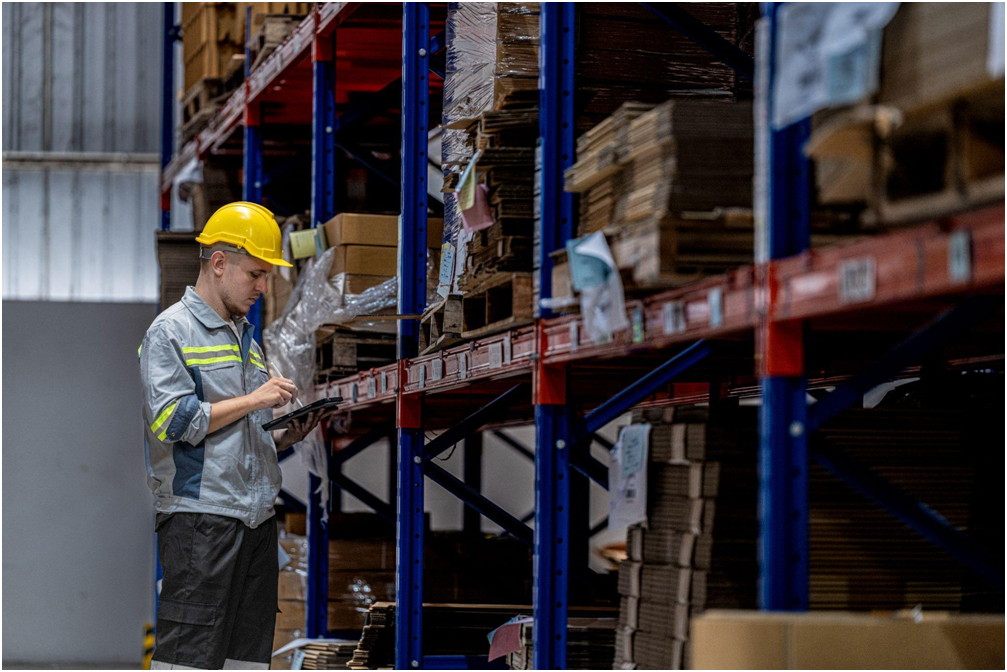
HSG76 recommends a structured inspection regime to make sure any damage or deterioration is identified early.
The Three-tier Inspection Hierarchy
1. Weekly visual checks: Conducted by a trained and competent person to identify obvious issues such as bent uprights, dislodged beams or missing safety components.
2. Monthly Reviews: A more systematic review to identify recurring damage patterns or operational risks.
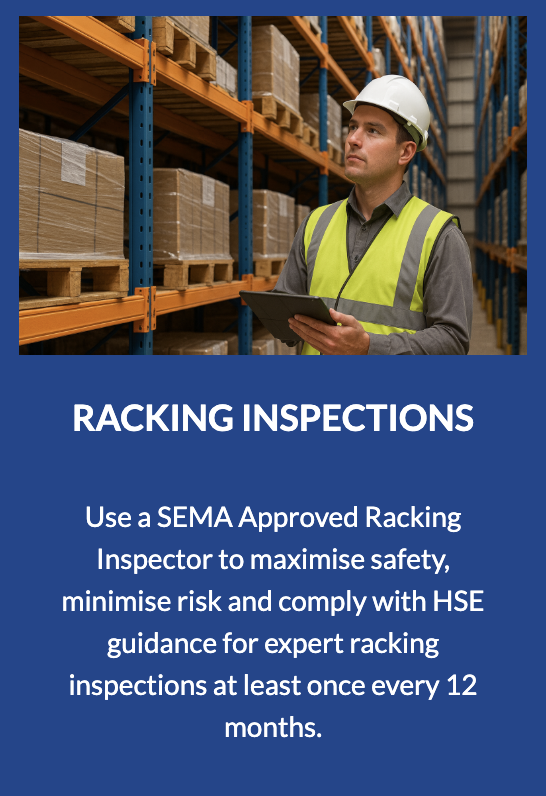
3. Annual Expert Inspections: A detailed assessment carried out by technically competent specialists—normally by SEMA-Approved Racking Inspectors (SARI).
SEMA: The Industry Benchmark
The Storage Equipment Manufacturers’ Association (SEMA) is the leading trade body for the storage equipment industry in the UK. While not a regulator, its guidance is widely recognised and referenced within HSE materials.
SEMA developed the widely used “Traffic Light” system to classify racking damage:
Green Risk: Damage within acceptable limits that should be monitored.
Amber Risk: Damage that exceeds recommended limits, and should be repaired within a defined timeframe (commonly up to 4 weeks)
Red Risk: Severe damage that requires immediate offload and isolation.
Following this system helps keep your maintenance workflow structured and risk-based in its approach.
The role of the PRRS (Person Responsible for Racking Safety)
HSG76 strongly recommends appointing a Person Responsible for Racking Safety (PRRS) to manage and coordinate racking safety processes.
This individual typically:
- Acts as the main point of contact for racking safety issues.
- Coordinates with external inspectors and makes sure repair work is completed.
- Maintains the “Racking Log,” which tracks every inspection, damage report and repair.
- Ensures that staff are reporting damage immediately, creating a “no-blame” culture where drivers aren’t afraid to report a collision.
What this Means for Warehouse Operators?
In recent years, the emphasis on competence has increased significantly. The HSE expects businesses to demonstrate that individuals carrying out inspections are properly trained and capable of identifying risks.
Simply carrying out informal checks without evidence of competence or record-keeping may not be sufficient to demonstrate compliance.
Key compliance checklist:
Appoint a PRRS: Make sure they have the appropriate authority and training.
Display load notices: Clearly show safe load limits on all racking.
Maintain an inspection log: Keep accurate records of checks, findings and actions.
Arrange competent repairs: Use suitably qualified professionals and appropriate components.
How SEE Racking Inspections Can Help?
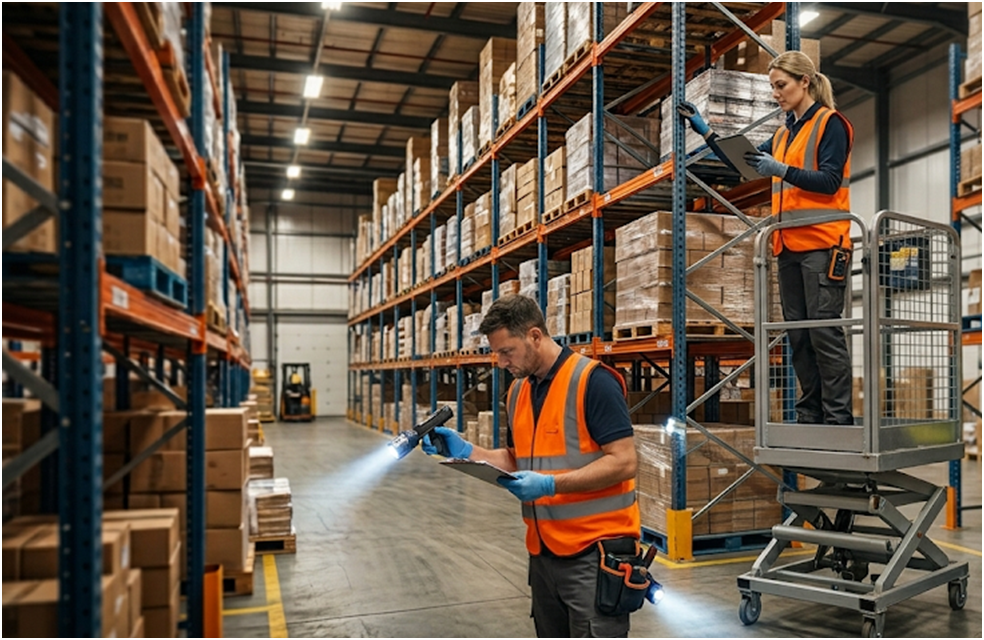
Even this brief list shows how much there is to consider when it comes to racking safety and compliance. You don’t need to manage it on your own, however. At SEE Racking Inspections, we specialise in helping businesses achieve compliance while maintaining operational efficiency.
Annual Inspections by SEMA-Approved Inspectors: Our SARI-qualified inspectors provide the independent, unbiased reports required by the HSE and insurers.
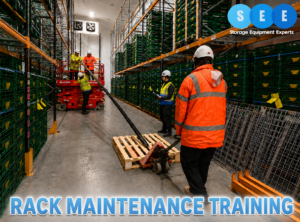
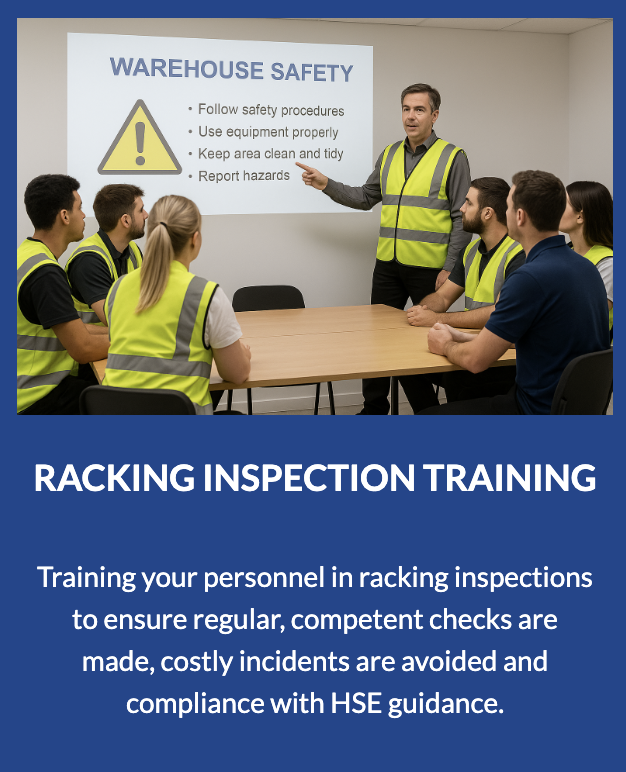
Rack Safety Awareness Training: We train your team to carry out daily and weekly checks confidently, ensuring your PRRS is fully prepared for the role.
Unbiased Advice: We don’t manufacture or sell racking. We focus our reports solely on your safety, so they address what you need not what we want to sell.”
When you partner with us, you do more than meet HSE requirements. You protect your staff, your stock, and your business’s future. Get in touch with SEE Racking Inspections and gain expert, independent advice you can depend on.