
For all the technology involved in modern warehouse operations, the inherent combination of people, products and machinery means warehouses can be risky places to work. Behind every organised warehouse aisle and efficient workflow is a set of decisions that determine how safe these operations really are.
When it comes to UK operators, one document serves as the benchmark for making those decisions: HSG76. Far more than just a formality, HSG76 sets the standard for total site safety, guiding how personnel, vehicles and storage structures should coexist to minimise risk. In this guide, we’ll unpack what HSG76 actually requires, why it matters for anyone in the warehousing business, and how companies like SEE Racking Inspections can help deliver safe, compliant operations.
Key Takeaways
- Legal duty: Business owners have a statutory obligation to provide a safe working environment, with HSG76 being the primary roadmap for achieving this in warehouses.
- Risk mitigation: The guidance addresses high-risk factors, including vehicle movement, manual handling and working at height.
- Three-tier inspections: Compliance relies on a structured inspection regime, ranging from daily checks to annual expert audits.
- Competency is central: The guidance heavily references SEMA (Storage Equipment Manufacturers’ Association) for installation and inspection benchmarks.
- Operational efficiency: Beyond safety, adhering to these standards prevents costly downtime caused by structural problems.
What is HSG76?
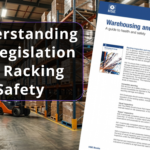
HSG76 is the comprehensive guidance for warehousing and storage issued by the HSE (Health and Safety Executive). Developed in collaboration with the Warehousing Health and Safety Forum (which includes trade associations, unions and employer bodies), it’s basically the bible for warehouse safety.
The sheer density of activity in warehouses creates multiple risk zones that require constant monitoring. These include:
High movement of vehicles and workers: The constant interaction between lift trucks and pedestrians.
Slips, trips and falls: Often caused by poor floor maintenance, spillages or debris in aisles.
Manual handling hazards: Risks of musculoskeletal disorders from repetitive lifting and moving of goods.
Working at height: The major risks associated with tall racking structures and overhead storage systems.
HSG76 provides a structured framework to manage these risks. While the document itself is guidance rather than law, it’s frequently used in courts to determine whether a business has met its legal obligations under the Health and Safety at Work Act 1974. Essentially, if you follow HSG76, you’re generally considered to be doing enough to comply with safety law.
How Does HSG76 Affect Racking?
It’s not uncommon for people to view warehouse racking in the same way that they view shelves in their living room. While the fundamental principles may be similar, warehouse racking is a sophisticated, load-bearing structure engineered to withstand far greater demands. Unlike your living room shelves (that you can probably do a DIY fix on yourself), when a warehouse rack fails, the results can be catastrophic.
HSG76 places a major focus on the entire lifecycle of racking systems, from the moment of installation to ongoing maintenance.
Competent Installation
Racking needs to be installed by competent persons following the manufacturer’s instructions. It specifically points toward the SEIRS (Storage Equipment Installers Registration Scheme) as a benchmark for competency. This makes sure that the structural integrity of the system is not compromised before a single pallet is even loaded.
The Three-Tier Inspection Regime
One of the most important aspects of HSG76 is the recommendation for a structured warehouse racking inspection routine.
| Inspection Level | Frequency | Scope |
| Immediate Reporting | Continuous | Warehouse staff reporting damage as it occurs. |
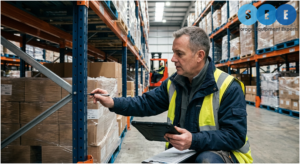
| Visual Inspections | Weekly | Conducted by a trained “Person Responsible for Racking Safety” (PRRS). |
| Expert Inspections | Every 6–12 Months | A technically competent professional (e.g., a SEMA Approved Rack Inspector). |
Training and Standards
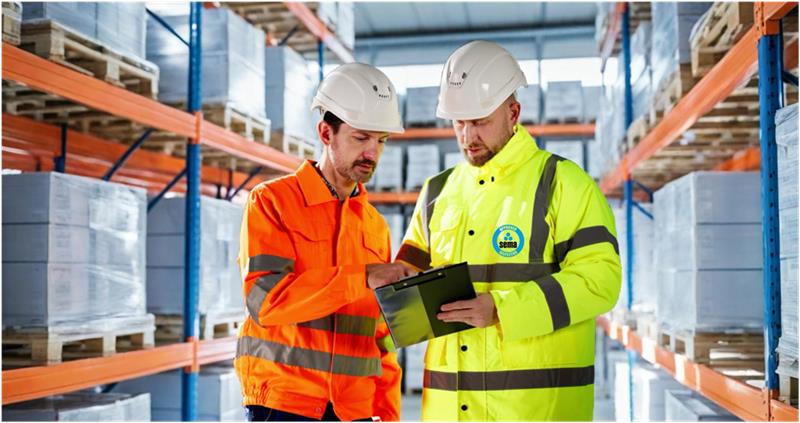
More than advising on what to do, HSG76 also tells you how your safety operations should be measured, referencing SEMA standards for assessing damage. These standards provide a clear, colour-coded risk hierarchy that helps operators categorise defects consistently and decide whether equipment can remain in use, requires monitoring, or must be taken out of service immediately.
To comply, staff performing weekly checks should ideally complete a Rack Safety Awareness course. This training equips them to recognise early warning signs such as twisted uprights, dislodged beams, or impact damage, and to understand the key differences between low-risk and high-risk defects.
Building this competency into their routine inspections, warehouses can intervene long before a minor dent becomes a structural weakness or a full system failure. Ultimately, the goal is to create a proactive safety culture where issues are identified early, escalated correctly and resolved before they disrupt operations or compromise worker safety.
The Importance of Independent Inspections
A common pitfall in the industry is relying on racking suppliers or repair companies to conduct safety inspections. While many are capable, there’s an obvious conflict of interest when the person inspecting the rack is also the person who profits from selling the replacement parts.
HSG76 emphasises the need for an expert inspection by a technically competent person. By using an independent inspector (who doesn’t sell racking), business owners receive an unbiased, objective report. As a result, the inspection remains purely focused on safety and compliance, ensuring that repairs are only recommended when necessary according to SEMA standards.
How See Racking Inspections Can Help?
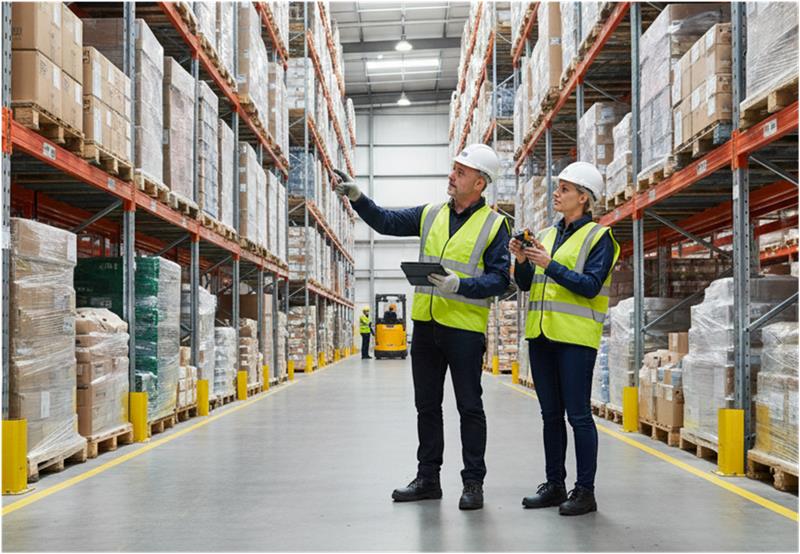
At See Racking Inspections, we specialise in translating the often complex aspects of HSG76 into a practical safety regime for your warehouse. In short, we keep your operations fluid while helping to maintain a flawless safety record. Most importantly, because we don’t sell racking, our advice is 100% independent and unbiased. We aren’t looking for a repair contract – we’re looking for hazards
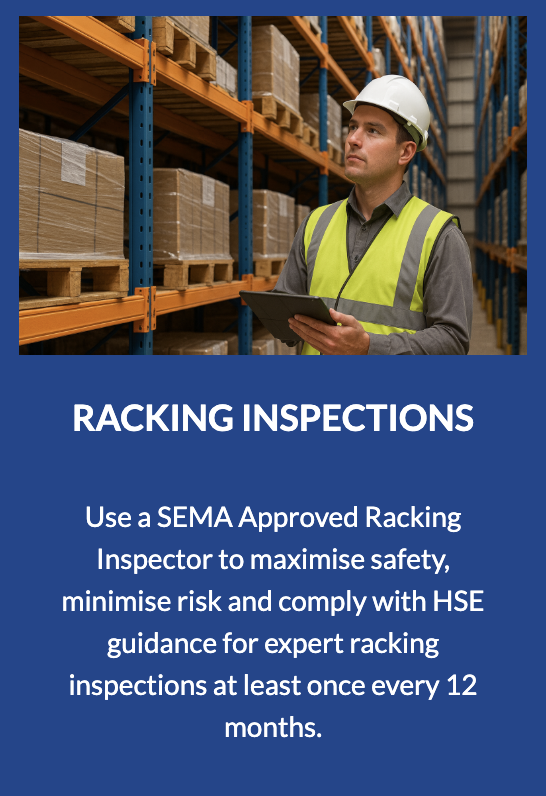
Pallet racking inspections: Delivered by SEMA-approved racking inspectors (SARI) across the UK and Ireland. We provide detailed reports that keep you compliant with HSE expectations.
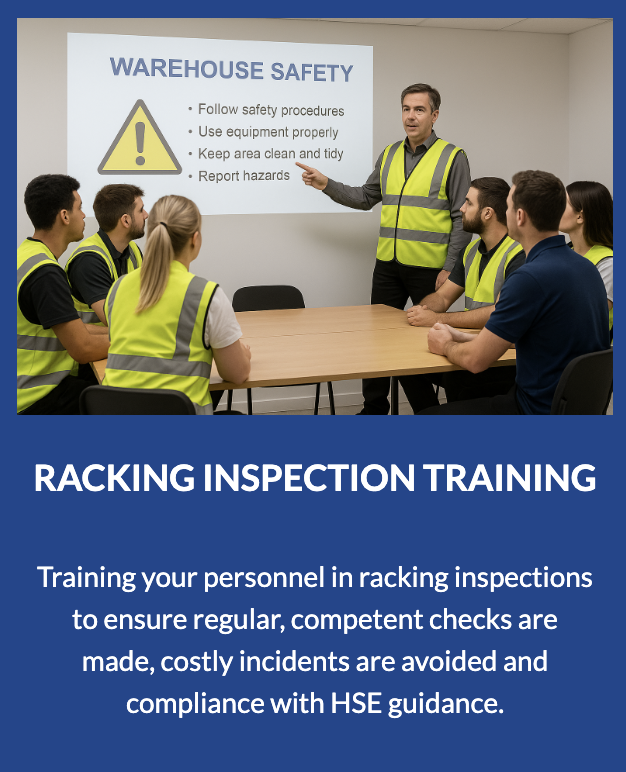
Racking inspection training: We deliver the training needed for your warehouse staff to conduct the weekly visual inspections required by HSG76.
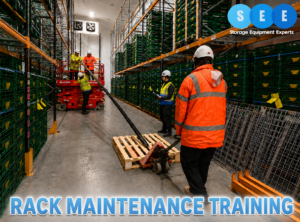
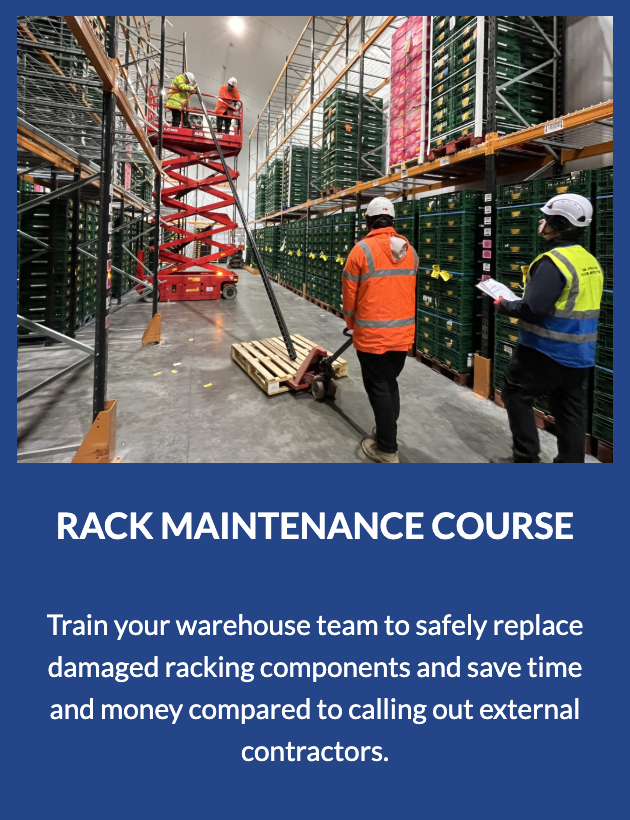
Rack maintenance training: We provide specialised training for your maintenance teams, teaching them how to identify and maintain systems to the highest standards.
Whether you are managing a single site or a national network, our inspectors provide the consistent oversight needed to protect your business and your people. Get in touch with SEE Racking Inspections for expert, independent advice you can count on.