How the SEMA Codes of Practice Ensure Warehouse Safety?

The Storage Equipment Manufacturers Association, commonly known as SEMA, is the de facto leader when it comes to safety standards in the warehousing sector. Founded to consolidate the collective expertise of storage equipment professionals, SEMA has been key in framing and promoting best practices within the industry.
Let’s take a look at SEMA’s work and why ALL warehouse managers and operators should adhere to the codes of practice…
The Need for Standardised Warehouse Safety Standards
The warehousing sector is diverse in terms of operations – from handling delicate electronics to bulky machinery, each facility demands unique storage solutions. In fact, the one thing that all warehouses have in common is the fact that safety should be a priority.
Without standardised safety protocols, the intricacies of individual operations could inadvertently breed inefficiencies or, worse, hazards. Storage equipment carries inherent risks – incorrect loading, wear and tear, or even a simple misalignment can result in catastrophic failures.
Imagine a heavily loaded pallet rack collapsing due to a weakened joint or an aisle blocked because of a misjudged placement, posing threats not just to merchandise but also to human lives.
These common risks underline the pressing necessity for uniform safety guidelines, ensuring that irrespective of the warehouse’s operational nature, safety remains uncompromised.
Overview of the SEMA Codes of Practice
SEMA traces its origins back to an era when warehousing and storage industries were recognizing the escalating need for standardized guidelines. Over the years, as complexities grew and technologies evolved, there was a clear requirement for a unified approach to safety and efficiency in warehouse operations – which is why SEMA introduced its Codes of Practice.
The adoption of these codes wasn’t just a formality. It was a collective acknowledgement by industry stakeholders of the high importance of safety. These codes, over time, have cemented their position as the definitive guide for best practices in the storage equipment sector.
Central to SEMA’s Codes of Practice is a twofold objective:
- To establish a clear and comprehensive guideline that ensures the design, installation, and use of storage equipment prioritizes human safety above all else.
- To optimize warehouse operations, ensuring that the utilization of space and resources occurs efficiently without compromising on safety.
These objectives, at their core, are a testament to SEMA’s commitment to marrying efficiency with safety, guiding the industry towards a future where warehouses are not just productive but also inherently secure environments.
Key Provisions in SEMA’s Codes
Rack Design and Specifications
SEMA’s codes place strong emphasis on storage rack design. The focus goes beyond aesthetics and space optimization—it centers on safety, strength, and resilience.
These codes define the materials, design standards, and engineering principles that rack systems must follow. They ensure racks can safely support their loads while also resisting external forces such as seismic activity and accidental impacts.
Load Notices and Weight Limitations
SEMA’s codes come with clear directives about displaying load notices conspicuously – these notices are essential as they inform workers about the maximum permissible load, helping prevent overburdening that can lead to catastrophic failures.
Inspection Protocols
The codes prescribe periodic checks, both routine and in-depth, to ensure that every component of the storage equipment is in top shape. This provision also defines the requirements for thorough inspections and outlines how teams should address any issues.
Training Requirements for Rack Safety Awareness
Recognizing that the best safety equipment is only as good as the people using it, SEMA’s codes highlight the importance of training. The emphasis is on creating a workforce that’s well-versed in best practices and equipped to handle emergencies.
The Importance of Regular Racking Inspections
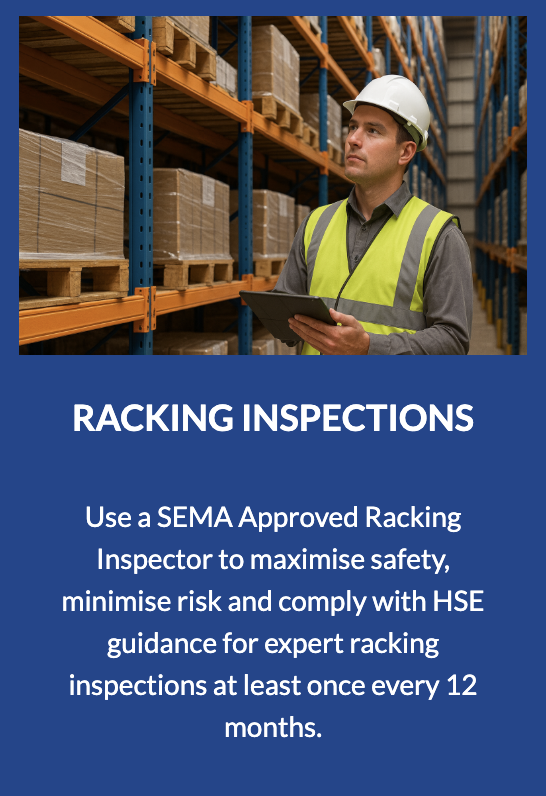
Warehouse operations depend on safe and reliable storage systems. That’s why regular racking inspections play a key role in SEMA’s codes of practice. SEMA Approved Rack Inspectors receive specialist training under SEMA’s rigorous standards. They help identify potential hazards and keep racking systems safe.
These inspectors have the expertise to examine every part of a storage system, from bolts to beams, and ensure it meets safety standards.
SEMA’s guidelines establish a clear inspection hierarchy. Warehouse staff should carry out routine checks daily or weekly, while SEMA Approved Racking Inspectors should conduct comprehensive annual assessments.
This tiered approach to inspections, coupled with their frequency, ensures that potential issues are nipped in the bud.
Warehouse Safety Training and Certification Under SEMA
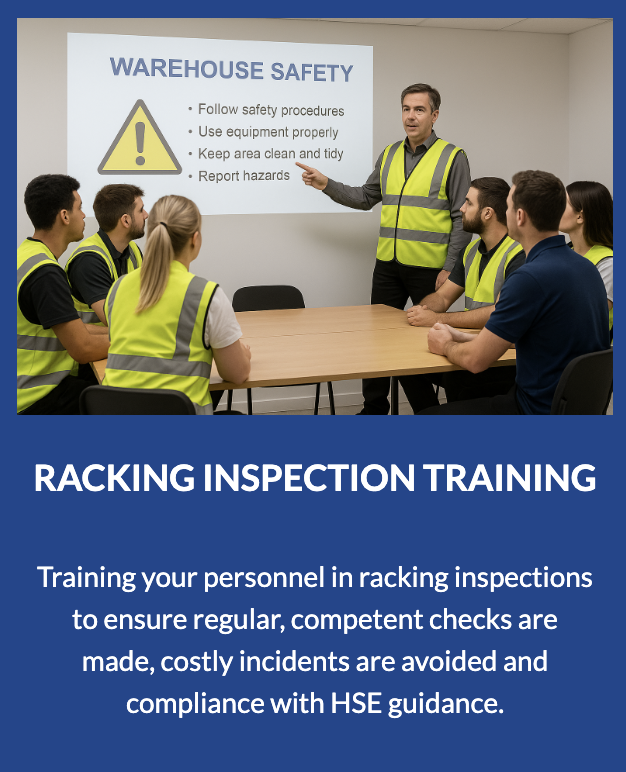
SEMA runs robust training programs to build essential safety skills. A key initiative is the Rack Safety Awareness Program. It teaches participants about potential hazards, safety protocols, and best practices for managing storage equipment.
Beyond mere awareness, SEMA raises the bar with its certification for rack inspectors. Those pursuing this accreditation are rigorously trained, undergoing a series of tests to validate their competence – once certified, they carry the distinction of being recognized experts in storage equipment safety.
However, the learning curve doesn’t stop at certification. SEMA ensures that its professionals remain abreast of industry evolutions and safety updates – showing once again the commitment to continuous learning and unyielding safety standards.
SEMA’s Influence in Driving Industry-wide Safety
SEMA’s focus on storage safety has improved industry practices. Its partnerships with manufacturers and regulatory bodies strengthen safety awareness. Together, these organizations promote a consistent approach to prevention and risk reduction.
Additionally, SEMA has been instrumental in advocating for stricter adherence to safety protocols. Through seminars, workshops, publications and other approaches, they consistently emphasize the non-negotiable nature of safety. Their influence is palpable – many warehouses and storage facilities now prioritize SEMA’s guidelines, ensuring their operations align with the best and safest practices.
In essence, SEMA’s unwavering commitment has been a catalyst, inspiring a pervasive culture of safety across the storage equipment landscape.
Continuous Evolution of SEMA’s Codes
Safety guidelines must evolve as technology changes. SEMA regularly updates its Codes of Practice to meet new industry needs. As new storage equipment and technologies emerge, SEMA adapts its guidelines to keep them relevant, rigorous, and effective.
Another critical factor driving the refinement of SEMA’s codes is its engagement with industry stakeholders. SEMA ensures its codes address real-world challenges and needs by maintaining a consistent feedback loop with warehouse operators, equipment manufacturers, and safety experts.
What Next for your Warehouse Safety?
The SEMA Codes of Practice reflect the Storage Equipment Manufacturers’ Association’s strong commitment to safer warehousing. In a fast-paced industry, efficiency matters, but safety must come first. True efficiency starts with a safe working environment.
Warehouse managers and operators are strongly urged to adopt and adhere to SEMA’s comprehensive guidelines.
For more information or to schedule a racking inspection, contact the team at SEE Racking Inspections today. Our SEMA Approved Racking Inspectors can help keep your storage systems safe and compliant.
FAQs
The name of your premises should not determine your inspection needs. If your business uses racking to store goods, assess the system, how it is used and its safety risks to establish suitable inspections.
Stockrooms and retail storage areas may need racking inspections where racking is installed. Consider the storage equipment and operating risks rather than assuming that a smaller space does not need inspection.
HSE guidance recommends expert inspections at intervals of no more than 12 months. Regular visual checks should also take place weekly or at other intervals determined by a risk assessment.
HSE guidance recommends appointing a Person Responsible for Racking Safety (PRRS). This person coordinates regular checks, receives damage reports and maintains inspection records.