
As sturdy as warehouse racking may appear, a single averagely loaded pallet falling from height can strike with the force of a car doing 30 mph. It’s a serious threat – not just in terms of physical injury, but in terms of stock loss and HSE penalties. With racking damage often going unnoticed (certainly, to the untrained eye), businesses need to pursue specific safety procedures to stop their warehouses from turning into the logistics equivalent of a road accident.
To improve warehouse safety – and help warehouse owners and managers understand their obligations under PUWER (Provision and Use of Work Equipment Regulations) – SEMA (the Storage Equipment Manufacturers Association) launched the “Stay Racking Safe” campaign. In this article, we’ll look at 5 key lessons from the campaign, how important staff training is in the equation and how companies like SEE Racking Inspections can help keep your warehouse compliant.
Key takeaways
- The client holds final responsibility: Under UK law (PUWER), the warehouse owner is legally responsible for racking safety. You can’t delegate this liability to suppliers.
- Verify professional qualifications: Make sure installers hold SEIRS credentials. This confirms that accredited assessors have specifically trained and independently evaluated them to build racking systems safely and correctly.
- Load limits are there for a reason: Exceeding the limits on a Load Notice is a leading cause of major collapse. These signs are legal requirements and must be treated as engineered safety limits, not just general guidance.
- Staff training is your best defence: Safety is a daily task. Training floor staff to identify and report damage immediately creates a proactive safety culture that stops minor dents from turning into major structural failures.
- The SARI standard for inspections: For your annual expert inspection, always use a SEMA Approved Racking Inspector (SARI). This delivers impartial, technical reporting that prioritises repairs using a clear “traffic light” safety system.
1: Responsibility can’t be outsourced
One of the most important lessons from the “Stay Racking Safe” campaign is that the legal buck stops with the warehouse owner. While you might rely on a racking supplier to design the system and a contractor to build it, the Health and Safety at Work Act places the primary responsibility for the safety of that equipment on the user (the client).
This means you need to perform due diligence on your suppliers. Are their designs following SEMA Codes or EN 15512? Do they have the correct insurance coverage, including professional indemnity and product liability? SEMA-approved members undergo independent audits every five years to make sure they meet over 40 regulatory requirements. Choosing accredited partners allows you to create a paper trail of due diligence that protects your business in the event of an HSE investigation.
2: Installation is the foundation of integrity
A common pitfall in warehouse management is assuming that because the racking components are new, the structure is safe. The quality of the installation, however, is just as important as the structure itself.
Many suppliers subcontract installation to third parties. If these installers use incorrect fixings or fail to meet strict tolerances, the load-bearing capacity of the rack can be compromised from day one. SEMA’s campaign stresses the importance of the Storage Equipment Installers Registration Scheme (SEIRS). When your installers hold SEIRS certifications, you can be confident that trained, assessed professionals are building your warehouse racking to industry-leading safety standards.
3: Respect the Racking Load Notices
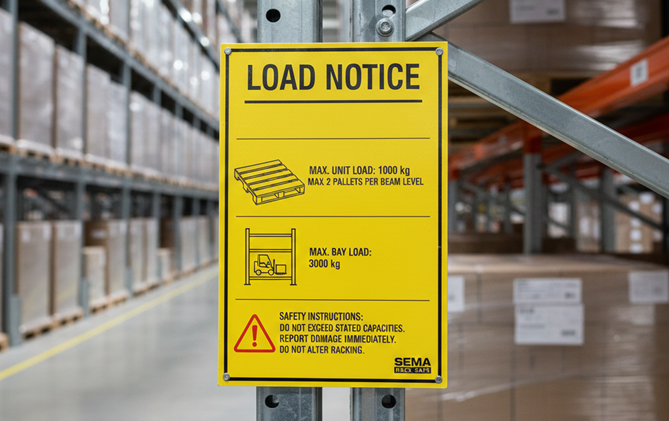
Every racking system is engineered to a specific configuration. If you move a beam or change the height of a level, you change the weight it can safely support. The Stay Racking Safe guide highlights the critical importance of loading racking correctly.
Every rack needs to display a Load Notice. This isn’t just a suggestion – it’s a key safety feature that displays weight limits, pallet numbers, and loading instructions. Importantly, displaying and training staff on these notices is a legal obligation. If your racking is missing these signs, or if they’re outdated, you’re operating in the dark and are significantly increasing the risk of a collapse and the legal repercussions that may follow.
4: Train your frontline staff
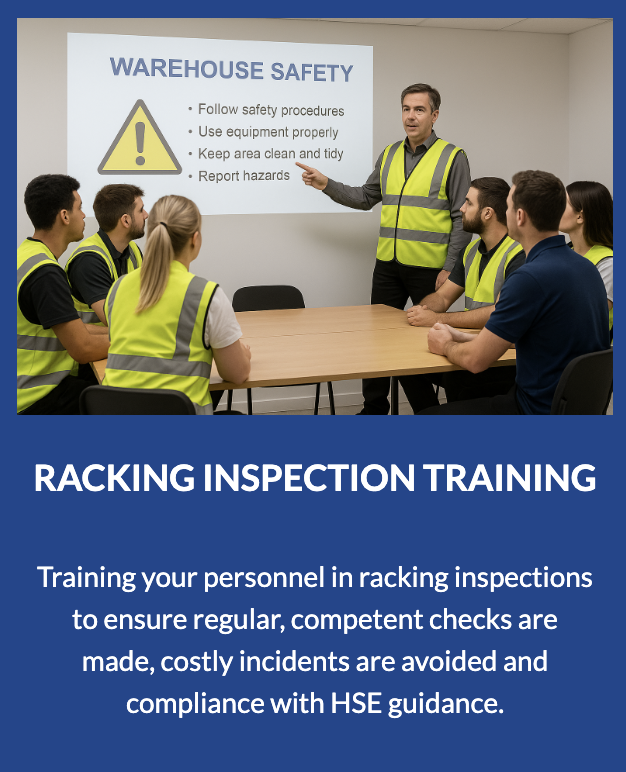
Warehouse racking safety is a 24/7 requirement, not a once-a-year event. While expert inspections are essential, your daily defence against accidents is your workforce. SEMA’s campaign underlines the need for Rack Safety Awareness training.
When you train your forklift drivers and floor staff, they become your “eyes and ears” on the warehouse floor. They learn to identify different types of damage and understand their role within the “Person Responsible for Racking Safety” (PRRS) hierarchy. A culture where drivers feel confident reporting minor upright strikes immediately helps prevent serious racking failures.
5: The “Traffic Light” strategy for inspections
Although the Stay Racking Safe campaign covers many topics, this final section focuses specifically on the hierarchy of racking inspections. To meet HSG76 standards, you need a three-tiered approach:
1. Immediate Reporting: Damage reported by staff as it happens.
2. Internal Inspections: Weekly visual checks by your PRRS.
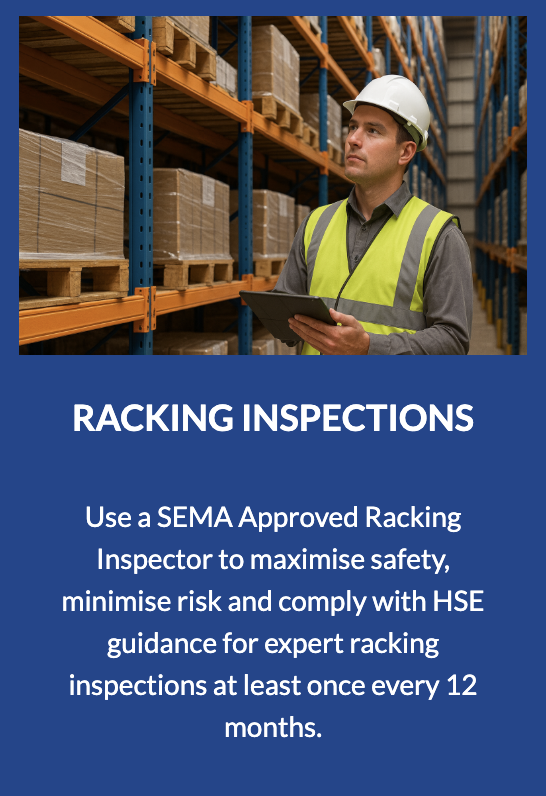
3. Expert Inspections: An annual (at minimum) detailed assessment by a qualified professional.
The campaign specifically recommends using a SEMA-Approved Racking Inspector, who’ll conduct inspections using a “traffic light” system (Red, Amber, Green) to prioritise repairs. Red risks require immediate unloading, while Amber allows for a managed repair window. This system provides a clear, documented action plan that helps you spend your maintenance budget where it’s needed most.
How SEE Racking Inspections Can Help

The Stay Racking Safe campaign is a call to action for warehouse managers to move from a reactive “fix it when it breaks” mindset to a more proactive safety culture. At SEE Racking Inspections, we specialise in turning this call to action into a reality.
With our team consisting of SEMA-Approved Racking Inspectors (SARI), we provide nationwide coverage across the UK and regular support for clients in Ireland. Importantly, because we do not sell racking, our advice is 100% independent and unbiased. Our goal isn’t to sell more equipment, it’s to make sure the equipment you have is safe, compliant, and efficient. We offer:
Annual Expert Inspections: Comprehensive reports that meet HSE (HSG76) requirements.
Racking Inspection Training: We give your staff the educational grounding they need to conduct competent weekly inspections.
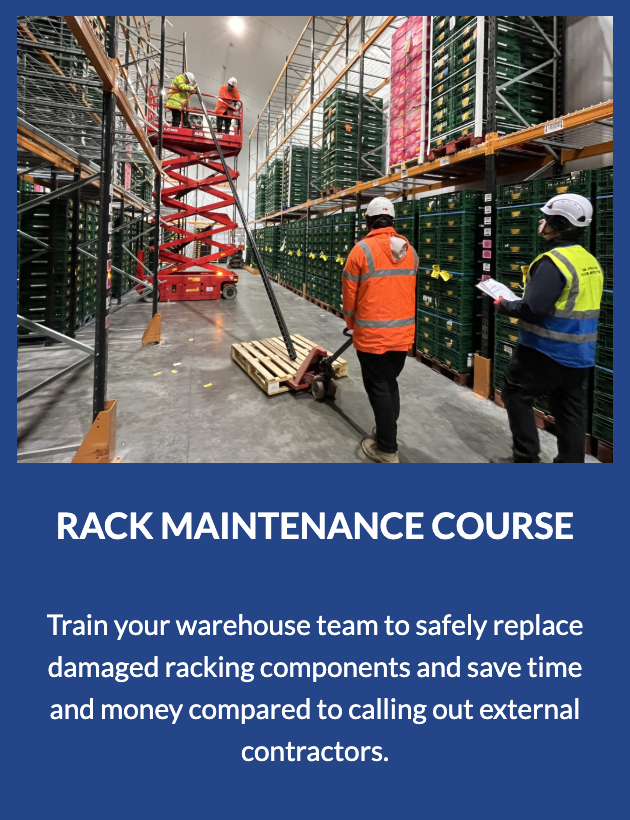
Rack Maintenance Training: We teach your teams how to safely replace components, saving you time and reducing reliance on external contractors.
Get in touch with SEE Racking Inspections and bring objective expertise to your warehouse safety operations.