How to Become a SEMA Approved Racking Inspector?

SEMA, the Storage Equipment Manufacturers’ Association, plays a vital role in warehouse safety through its SEMA Approved Racking Inspector (SARI) programme.
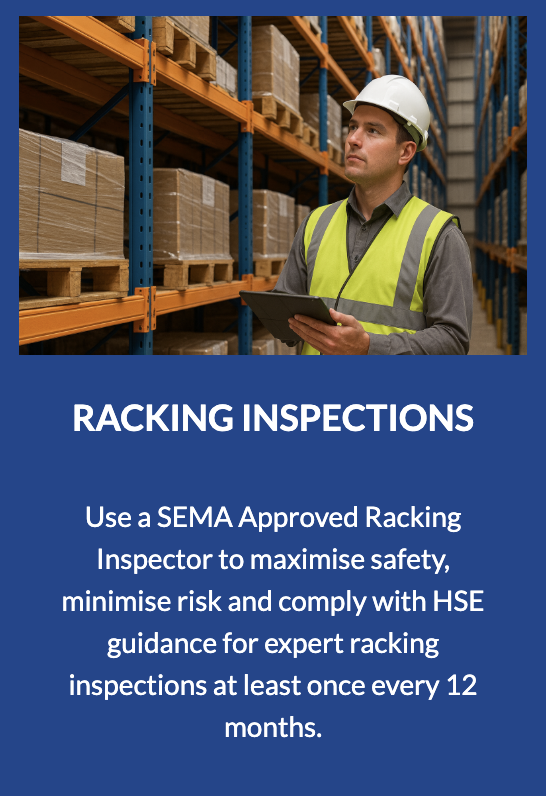
SARIs help ensure the safety and compliance of warehouse racking systems and other storage facilities. Their expertise helps prevent accidents and supports safe, efficient warehouse operations.
SARIs are professionals who ensure the safety and compliance of racking systems in warehouses and other storage facilities. Their expertise helps prevent accidents and maintain efficient operations.
The SARI (SEMA Approved Racking Inspector) role requires strong observational skills. Inspectors also need a good understanding of storage equipment and applications. Attention to detail is equally important. Additionally, an Inspector must be able to assimilate technical information and communicate findings clearly and concisely.
As such the SEMA Approved Rack Inspector course requires candidates to possess a good educational background with demonstrable literacy and numeracy skills together with appropriate industry experience.
This article explores the journey to becoming a SARI. It covers the prerequisites, training, and certification process. It also explains career opportunities and the role of SARIs in warehouse safety.
The Prerequisites
To pursue a career as an SEMA Approved Racking Inspector, certain foundational prerequisites are essential.
Applicants should ideally hold an HNC/HND qualification in an engineering-related subject.
They should also have two to three years of practical experience working with racking systems. This includes carrying out racking inspections and other activities related to maintaining racking safety.
Key skills for this role include attention to detail and a strong understanding of safety standards. Inspectors must also be able to assess and manage risks. A deep understanding of warehouse operations and a commitment to safety are also crucial. These qualities help SARIs uphold and enforce safety standards.
The SEMA Training Program
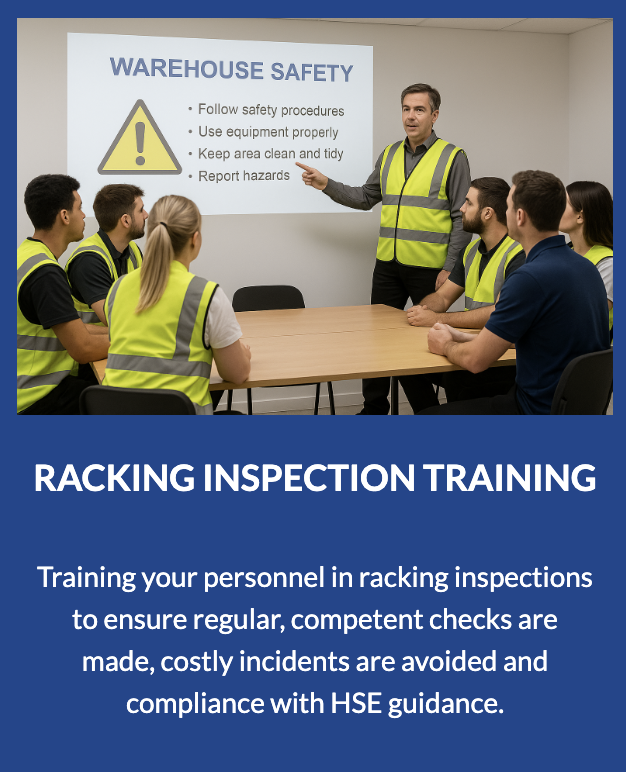
The training program is a comprehensive course designed for aspiring rack inspectors. The program typically spans several days. It covers essential topics for the role, including racking system fundamentals, risk assessment techniques, and the latest safety standards.
Trainees also learn about SEMA’s codes of practice and guidelines. The focus is on both theoretical knowledge and practical skills. This approach prepares inspectors for real-world scenarios.
The training concludes with an assessment, evaluating the participants on their grasp of the material and their ability to apply it in a practical setting. Once certified, the student will be able to perform SEMA-approved racking inspectors.
The SEMA Certification Process
The certification process to become a SEMA Approved Racking Inspector involves several stages.
First, candidates must complete the required SEMA training. They then undergo examinations to demonstrate their understanding of racking systems and safety procedures.
Practical assessments are also essential. During these assessments, candidates must demonstrate their ability to inspect racking systems and identify potential hazards.
Practical assessments are also a core part of the certification, where candidates must demonstrate their ability to inspect racking systems effectively and identify potential hazards.
Only upon passing these assessments does a candidate earn the SARI certification. This rigorous process ensures that SARIs possess the necessary knowledge and skills to perform their duties with proficiency and accuracy.
Gaining Practical Experience
Practical experience is essential for aspiring SEMA Approved Racking Inspectors.
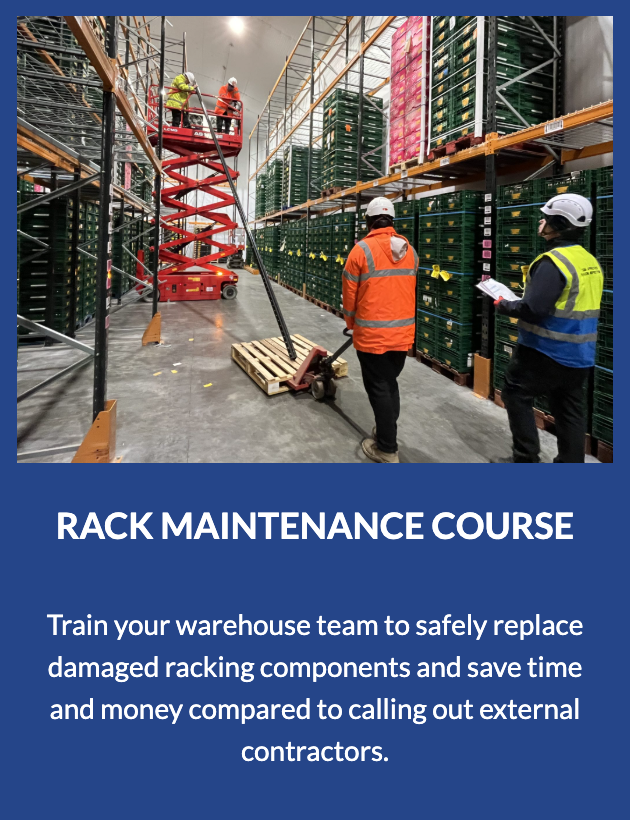
Candidates should gain hands-on experience in different warehouse environments. This may involve working alongside experienced inspectors, participating in safety audits or carrying out supervised inspections.
Exposure to various racking systems helps candidates develop practical inspection skills.
This can include working alongside experienced inspectors, participating in safety audits, or engaging in routine inspections under supervision.
Gaining exposure to different types of storage facilities enhances an inspector’s ability to identify and address a wide range of potential issues, this real-world experience is the best way to develop the practical skills and judgment necessary to excel as a SARI, complementing the theoretical knowledge gained through training and certification.
Continuing Professional Development
Continuing Professional Development (CPD) is important for SEMA Approved Racking Inspectors. Warehouse safety standards and inspection technologies continue to evolve.
Therefore, inspectors must keep their knowledge and skills up to date through ongoing professional development.
SEMA also requires inspectors to earn CPD points as part of maintaining their SARI certification.
SARIs should take part in ongoing education to stay up to date. SEMA requires inspectors to earn a minimum number of CPD points each year. These points are necessary to renew SARI certification.
Continuous learning helps SARIs maintain a high level of expertise. It keeps their knowledge and skills up to date. This strengthens their professional competency and supports high safety standards in warehouse management.
Building a Career as a SARI
A career as a SEMA Approved Racking Inspector offers a range of opportunities.
Qualified inspectors can work in warehouse safety management, become independent consultants or join specialist inspection companies.
Additionally, experienced SARIs may move into advisory roles, helping businesses improve storage safety and develop effective inspection procedures.
SARIs often have the opportunity to work across various industries, given the universal need for safe storage solutions, and as experts, they may also transition into advisory roles, helping design safer storage systems or developing safety protocols.
The career trajectory for a SARI also includes potential leadership roles in safety management and training, making it a fulfilling career choice for those passionate about workplace safety and efficiency.
Challenges and Rewards
Working as a SEMA Approved Racking Inspector comes with its unique set of challenges and rewards. Inspectors often face complex inspection scenarios and must stay updated with evolving safety standards – and the responsibility of ensuring warehouse safety can be as demanding as it is rewarding.
Overcoming these challenges brings a sense of accomplishment, knowing that the work the inspector does is directly contributing to preventing accidents and maintaining safe work environments. The role also offers intellectual satisfaction, as it requires constant learning and adaptation.
What next?
Becoming a SEMA Approved Racking Inspector requires relevant education, practical experience and ongoing professional development.
Candidates must meet the necessary requirements, complete their assessments and maintain their professional competence.
At SEE Racking Inspections, we understand these requirements because we are SEMA Approved Racking Inspectors ourselves.
At SEE Racking Inspections, we know exactly what it takes to achieve and maintain the certification – because we are SEMA-approved racking inspectors ourselves.
The role of a SARI is critical in ensuring the safety and efficiency of warehouse operations, and their expertise significantly contributes to preventing workplace accidents.
As the demand for safe storage solutions grows, the importance of SARIs in maintaining high safety standards in warehouses cannot be overstate, making it a vital and fulfilling profession.
FAQs
Check their qualifications, relevant experience, services offered and knowledge of local safety requirements. Confirm that they are competent to inspect the specific type of racking in your warehouse.
A SEMA Approved Racking Inspector (SARI) has completed specialist training and assessment. This qualification helps you assess their competence, but you should also confirm that it covers your particular racking system.
Not automatically. Cantilever racking requires specific knowledge and relevant qualifications. Before booking, confirm that the inspector’s credentials cover cantilever systems.
Ask whether they provide expert inspections, written reports, follow-up advice and staff training. Confirm what is included in the quoted service so you can compare providers accurately.
Safety guidance and requirements can differ between countries. Choose an inspector who understands those applicable to your warehouse and can explain how they inform the inspection.